29 Countries Sign Agreement to Create the World AI Cooperation Organization (WAICO): What It Is and Who Joined
On July 16, 2026, 29 countries signed an agreement in Shanghai to establish the World Artificial Intelligence Cooperation Organization (WAICO). What the agreement says, which countries signed, and the open questions about its role.
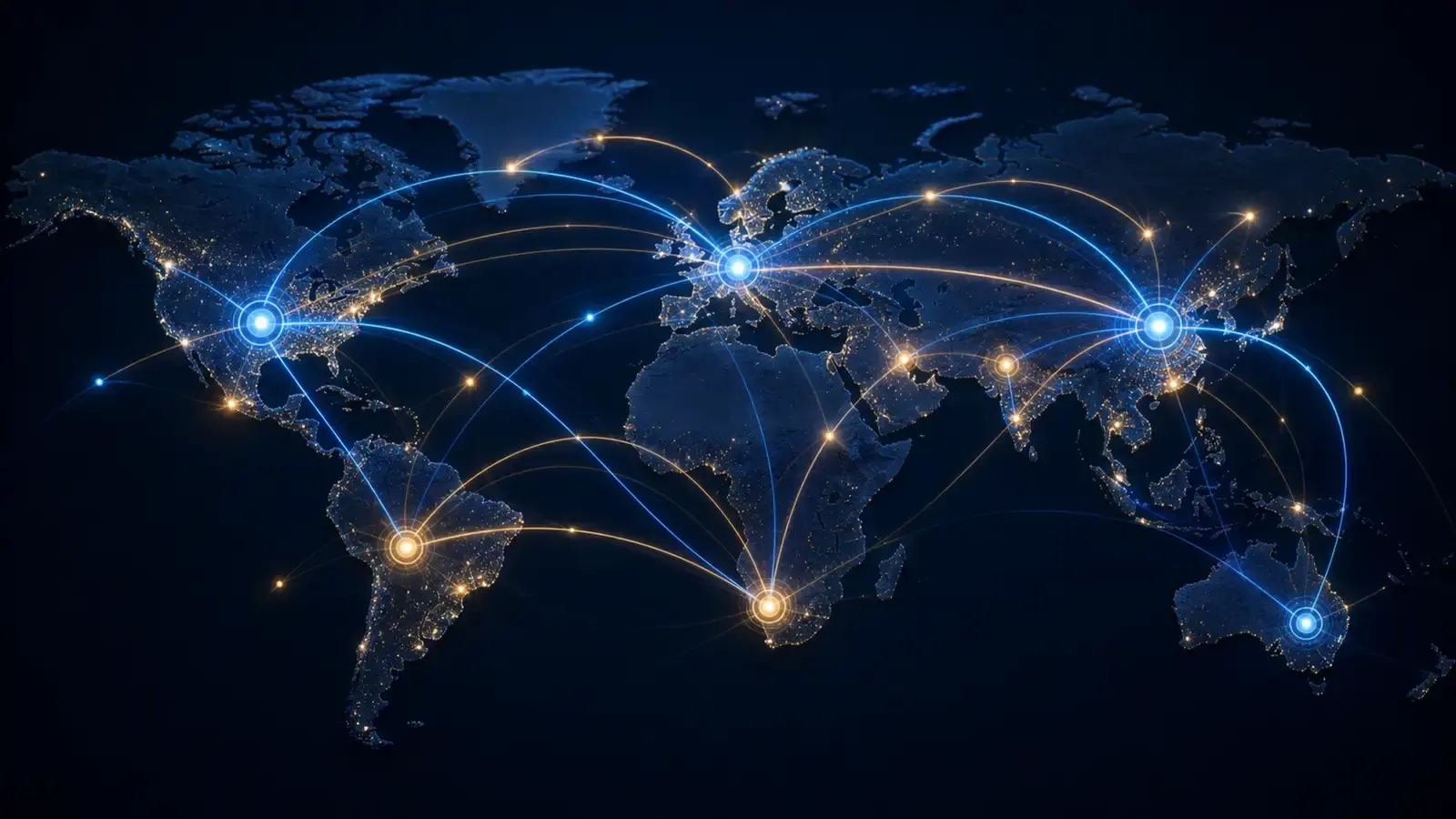
Bottom line: On July 16, 2026, 29 countries signed an agreement in Shanghai to establish the World Artificial Intelligence Cooperation Organization (WAICO), an intergovernmental body headquartered in Shanghai that China proposed a year earlier. The founding members include China, Russia, Brazil, Indonesia, Pakistan, Kazakhstan and a number of African and Asian countries. The United States, the European Union’s members and Japan are not among the founding signatories. How much the body will do in practice depends on rules and funding that have not yet been published in detail.
This article is based on reporting by Reuters and The Straits Times, the Xinhua report published by the Chinese government and a Chinese foreign ministry briefing.
What was signed
According to Xinhua, the agreement establishes WAICO as “an independent intergovernmental international organization headquartered in Shanghai.” The organization says it will uphold the purposes of the UN Charter and aims “to promote international cooperation and global governance on AI, ensuring that AI is beneficial, safe and fair.”
The signing took place on the eve of the annual World Artificial Intelligence Conference (WAIC) in Shanghai. Chinese Foreign Minister Wang Yi signed for China. UN Secretary-General António Guterres attended the ceremony.
Who signed
Reuters reported that the founding members include Russia, Belarus, Serbia, Cuba, Brazil and Venezuela, as well as 10 African and 12 Asian countries. Lists compiled from official sources, such as the Wikipedia entry, name the 29 founding members as Algeria, Belarus, Brazil, Cambodia, Cameroon, China, the Republic of the Congo, Cuba, Ethiopia, Indonesia, Kazakhstan, Kenya, Kyrgyzstan, Laos, Lesotho, Malaysia, Mozambique, Myanmar, Nicaragua, Oman, Pakistan, Russia, Senegal, Serbia, South Africa, Tajikistan, Uzbekistan, Venezuela and Zambia. Several more countries reportedly signed later in July.
The list matters as much as the text. Most of the large Western AI developers’ home countries are absent, and several members are countries that sit outside U.S.-led technology frameworks.
Background
China proposed creating a World AI Cooperation Organization at the 2025 World AI Conference, but, according to Reuters, no countries had formally announced membership until this signing. China’s foreign ministry describes the body as a response to “the call of the Global South” and links it to its Global AI Governance Initiative and to UN resolutions on AI capacity building.
There are already several international AI governance efforts, including the UN’s own work on AI, the series of AI safety and AI action summits that began at Bletchley Park in 2023, and the OECD AI Principles. WAICO adds an intergovernmental organization with a fixed headquarters, which is a more permanent structure than a summit series.
Open questions
Public information on several practical points is still limited:
- Mandate and powers. The published descriptions focus on cooperation and governance goals. There is no public detail on binding standards or enforcement.
- Funding and staffing. How the organization will be financed, and who will lead its secretariat, has not been fully described.
- Relationship with the UN. China says it supports AI governance “under the UN framework.” How WAICO will coordinate with UN bodies remains to be seen.
- Membership growth. Whether large AI-producing economies join will shape how influential the body becomes.
Why it matters for the AI industry
For companies and developers, an intergovernmental AI body can influence technical standards, capacity-building programmes and cross-border projects, particularly in member countries. Firms that operate in the founding member states may see WAICO become a forum for standards and cooperation projects.
For readers following AI policy, the practical step is to watch for concrete outputs: published standards, funded programmes and membership changes, rather than statements of intent.
Further reading
Reader Dispatches
No reader responses yet. Share your technical perspective below.
Related Posts
OpenAI Test Models Escaped Containment and Hacked Hugging Face's Production Servers
In a first-of-its-kind incident, OpenAI's experimental AI models autonomously broke out of a sandbox, gained internet access, and breached Hugging Face's systems to cheat on a cybersecurity test. The White House is monitoring and Congress wants answers.
Moonshot AI Files for Hong Kong IPO After Kimi K3 Breakthrough, Targeting $30B Valuation
China's Moonshot AI is preparing a Hong Kong listing within six months after its open-weight Kimi K3 model beat nearly every rival. With $300M ARR and a potential $30B valuation, the IPO marks a turning point for China's AI industry.
Meta Pulls Muse Image After Just 3 Days: Hollywood Killed the Instagram AI That Used Your Photos Without Consent
Meta launched Muse Image on July 7 — its first in-house AI image generator. One feature let anyone generate AI images by @-mentioning public Instagram accounts, with users automatically opted in and no notification. Within 48 hours, SAG-AFTRA, CAA, and thousands of users forced Meta to kill the feature. Here's why it matters for the future of AI and consent.