IBM Bob Self-Hosts. You Still Bring the Model.
IBM Bob's self-hosted option is generally available. You license the model, IBM published no price, and hybrid mode can still call Claude, Gemini, or GPT.
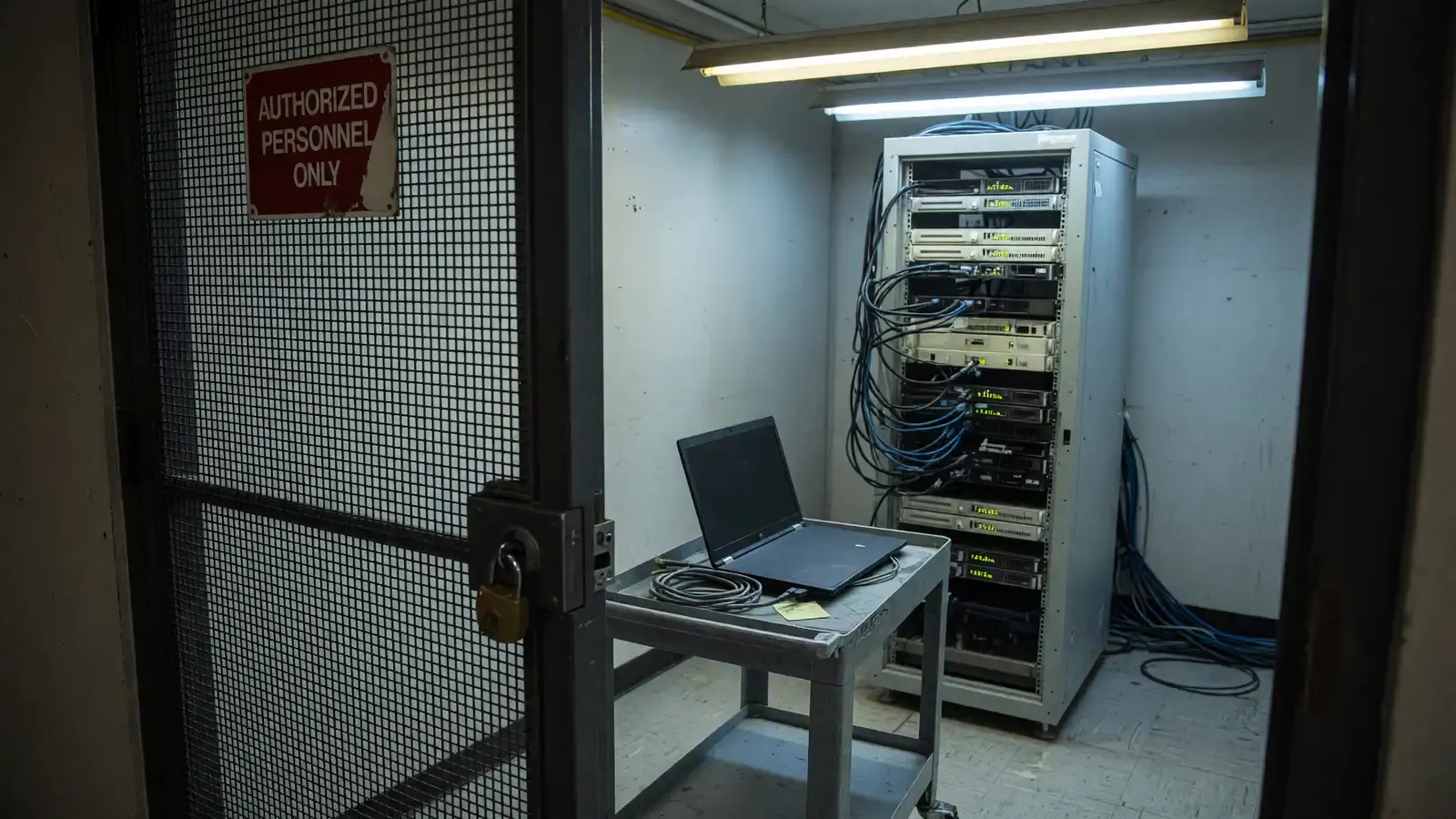
The press release is a deployment option, not a new model, and the second writeup is the one that says what you still have to buy. IBM’s newsroom post on Oct. 1 says a self-hosted IBM Bob can run where the code already lives, including in an air gap. Sana Hassan’s MarkTechPost piece says the option is generally available to enterprise customers, that you must source, license, and host a supported model yourself, and that IBM has not published a price. I am keeping those two sentences apart. “Generally available” is not “here is the invoice.”
We already wrote the control-layer product in JetBrains Air is not a new model. We wrote the firewall arrangement in Coder put Claude Code behind your firewall, and Anthropic still runs the loop. We wrote the model-swap tool in Goose lets you swap models and will not swap out the bill. Bob is a fourth shape. IBM wants the agent in the room that cannot phone home, and it wants you to arrive with a model license.
IBM Bob’s self-hosted option is a place, not a brain
IBM describes Bob as an agentic software development platform that helps teams understand code, plan work, execute changes, and validate results. The Oct. 1 announcement page lists what general availability includes: Bob running in a customer-managed environment; a core set of capabilities, the IDE experience, BobShell, parallel tool calling, an agent harness, skills and modes; a choice of self-hosted, air-gapped, and hybrid model configurations; bring-your-own-license for eligible models; integration with supported IDEs and infrastructure. Premium packages sit beside that list, not inside it. I will get to those.
The newsroom version of the same day is more about where the bytes stay. Many coding tools assume the code can leave. Enterprise modernization, IBM says, often means applications and data spread across on-premises systems, private clouds, and other controlled rooms. The self-hosted option is for organizations that want control over data residency, security policy, AI governance, and the development workflow. The contrast IBM draws is explicit: unlike tools that require you to move data to an external service, this version deploys where the code, the application context, and the data already reside.
That is a real distinction if your constraint is “this repository does not leave the building.” It is not a distinction about how good the edits are. Nothing in the Oct. 1 posts is a benchmark. Nothing is a diff. Hassan describes the lifecycle as understanding, planning, executing, and validating. Those are the verbs every agent vendor uses. What can be reviewed is the deployment contract, because that is what they published.
Neel Sundaresan, general manager of AI and automation at IBM, is quoted in the coverage of the release: organizations need AI that operates inside environments they control, especially with sensitive code and regulated data. The quote is the pitch. The product detail under it is the model configuration. If you only remember the quote, you will think IBM shipped a private model. They shipped a place to run one.
You bring the model, and two names are not a catalog
Hassan is blunt about the commercial shape. The self-hosted option is generally available to enterprise customers. You must source, license, and host a supported model yourself. IBM has not published pricing. Buyers are routed to a demo request. I would rather print that than invent a seat price from a rumor. A tool review that cannot tell you the cost should say so in the first screen, not in a footnote.
For full isolation, her piece names two models: Nemotron, or Poolside Laguna. The sources offer her model names and IBM’s phrase “supported models they’ve licensed.” If your security team needs the list that will pass an audit, the demo request is currently the door. That is a worse buying experience than a public matrix, and it is also how a lot of enterprise software still gets sold. I am going to say you cannot put Bob in a budget spreadsheet from the public posts alone.
Hybrid mode, in the same MarkTechPost account, routes selected workloads to Claude, Gemini, or GPT models. That sentence changes the air-gap story. A hybrid configuration is not an air gap. It is a policy that some prompts stay and some prompts leave. IBM’s announcement page says you can run supported models on premises, including in air-gapped environments, or connect Bob to supported external model services through hybrid configurations. With a supported self-hosted model, code, development context, and build artifacts can remain inside the customer-managed environment. “Can remain” is doing a lot of work. It is true of the self-hosted model path. It is not automatically true of the hybrid path, because the hybrid path exists to call out.
If I were writing the internal note, I would split the purchase into two machines. One is Bob-in-the-room with Nemotron or Laguna, or whatever else is on the supported list when you ask. The other is Bob-with-a-phone, allowed to call Claude or Gemini or GPT for the workloads you marked. Those are different risk reviews. The press materials bundle them as flexibility. Flexibility is the word you use when you have not decided which one the customer will actually turn on.
Bring-your-own-license is the other commercial clause, and it is easy to misread. BYOL means an eligible model you already pay for can be the one Bob calls, subject to that model’s license and to IBM’s support list. It does not mean Bob is free once you own a model. IBM still has not published what Bob itself costs. You could arrive with a model contract and still need an IBM contract. Hassan says the buyer path is a demo. I am treating the demo as a required step, not as a courtesy.
The air gap is the claim that has to survive contact with the network
The 68% figure in the newsroom post is not a Bob benchmark. It comes from The Calculus of AI Sovereignty, an IBM Institute for Business Value report published in June 2026, and the Oct. 1 release cites it: 68% of surveyed executives say meeting data residency and sovereignty requirements across geographies is challenging. A vendor citing its own June survey in an October product post is not independent evidence. It is context IBM chose. I will use it as IBM’s stated reason for the product, not as a measurement of how many buyers will turn air-gap mode on.
Air-gapped, in the posts, means the supported model runs in an environment that does not need to reach an external model service. That is the configuration where IBM says code and build artifacts can stay put. It is also the configuration that makes you the operator of the model. You license it. You host it. You patch it. You pay for the GPUs. Bob’s harness sits on top. If the model is slow, or if the license forbids the use you had in mind, the harness does not fix that. The announcement does not include hardware sizing. Hassan does not either. A review that stops at “air-gapped” without saying “you run the model” is an ad.
CDO Magazine’s Oct. 1 note, by Tathagata Sen, is the paragraph I would hand to the person who owns the data policy. Self-hosting gives control, and it also hands you the operational responsibility. It does not remove the governance work. Someone still has to know what data the agent can read, which model processes it, and how those calls are monitored. That is not a feature list. It is the bill that shows up after the demo, in headcount. A cloud coding tool hides that bill inside the vendor’s tenancy. A self-hosted agent prints it on your floor.
I keep coming back to the Coder piece we ran in September for the contrast. That arrangement put Claude Code behind the customer’s firewall and left the loop on Anthropic’s side. Bob’s air-gap pitch is the opposite promise: the loop can stay in the room, if the model stays in the room. The hybrid pitch walks part of that back. If your requirement is “no external model, ever,” you do not want hybrid, and you should make the salesperson say “air-gapped, self-hosted model, no egress” in the order form. The blog post will not say it for you. It offers all three configurations in one breath.
Premium packages are a modernization catalog
The announcement page names three add-ons, each “subject to applicable licensing and deployment requirements”: a premium package for Java modernization, one for IBM i, and one for IBM Z. Hassan reads the differentiator the same way. GitLab and GitHub, in her comparison, bring agents to their own DevOps platforms. Mistral pairs an agent with its own open-weight models. IBM is aiming at long-lived estates, especially Java, IBM i, and mainframe code, inside networks that cannot touch the public internet.
That is a narrower customer than “every developer who wants autocomplete.” It is also a customer IBM already has. A Java modernization package and a Z package are not proof the agent is good at Java or at COBOL. They are proof IBM expects the deal to include the old estate, not only the greenfield service. I would want a sample repo and a before-and-after on a real module before I believed the package. The public posts do not include one. What they include is the SKU.
A name in a bullet is not a manual. If you are evaluating Bob against a tool whose CLI you can install this afternoon, this is the gap. Goose and the local Gemma path we wrote up can be tried without a demo. Bob’s self-hosted GA, on the public record this week, cannot.
JetBrains Air, which we reviewed on Sept. 29, was a control layer over other models. Bob can look similar if you only read “hybrid” and “Claude, Gemini, or GPT.” The difference is the air-gap SKU and the modernization packages. Air is not trying to be the thing that modernizes a Z box in a room with no route to the internet. Bob’s posts are. Whether the product does that is a question the posts do not answer with a log.
What I would ask before the demo ends
I would ask for the supported-model list in writing, not as a slide. I would ask which of Hassan’s two isolation names, Nemotron and Poolside Laguna, are actually on that list this week, and what “supported” means when the model vendor ships a new checkpoint. I would ask the price of Bob separate from the price of the model, and whether BYOL changes the Bob price or only the model price. I would ask what egress a hybrid configuration opens, and whether an air-gapped install can be proven not to call out, with a packet capture or a documented deny-all, not with a sentence in a blog post.
I would ask what the premium Java, i, and Z packages add that the core harness does not, and whether they require IBM staff. I would ask who monitors the agent’s access to source and to build artifacts, because Sen’s point is the one your auditor will ask, and the newsroom post does not answer it. I would ask for one modernization example on a codebase IBM does not own.
None of those questions are in the Oct. 1 materials. That is the review. IBM shipped a generally available way to run Bob in a room you control, and it left the model, the price, and the proof of the modernization claim on the other side of a demo request. If your constraint is residency, the option is the news. If your constraint is “show me the diff,” the posts are not the product yet.
Reader Dispatches
No reader responses yet. Share your technical perspective below.
Related Posts
CoreWeave Forge Launches: $60/Month for Small Teams and Per-Millisecond Sandbox Billing
CoreWeave launched Forge on Sept. 30. Forkast puts teams under 50 at $60 a month. Serverless sandboxes bill by the millisecond.
JetBrains Air Is a Control Layer, Not a New Model
JetBrains Air, announced Sept. 22, groups Junie, ACP, and a governance console. The IDE stays. The bundle is not generally available.
Mistral Studio on November 9: Preview Agents, GA Workflows, End-of-Month Private Cutover
Mistral's November 9 post labels Apps and Managed Agents as public preview and Workflows as GA on Mistral Cloud, and dates private cloud and on-premises for the end of November. The Studio page lists the controls, the examples, and the blanks a buyer still has to ask about.