Microsoft's Maia 200: The 1400-Billion-Transistor Declaration of Independence from Nvidia
Microsoft's Maia 200 is a 3nm AI accelerator designed to break Nvidia's monopoly. With claims of beating Google's TPU and Amazon's Trainium, it's a strategic pivot in the cloud wars.
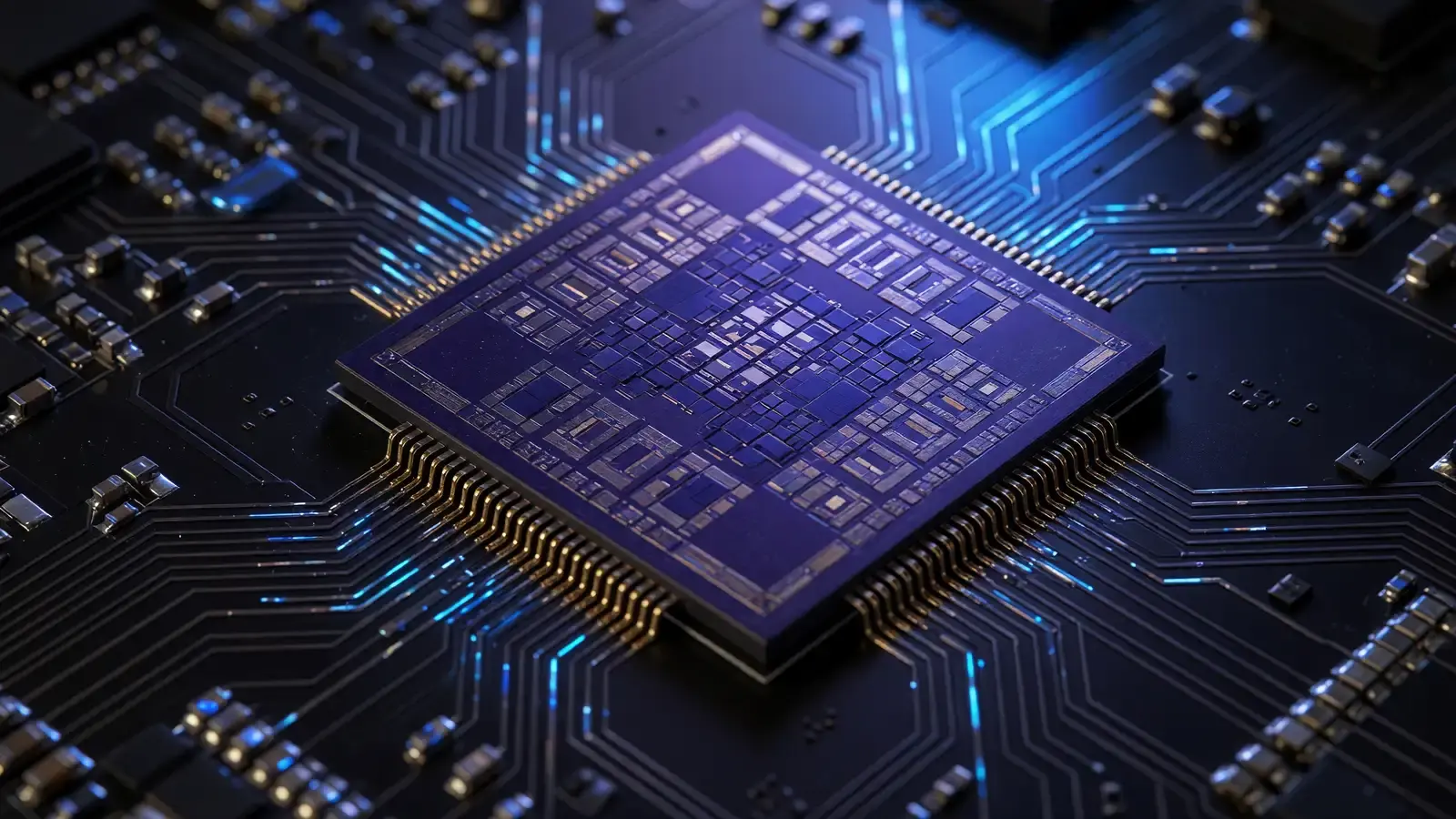
For the last three years, the tech industry has been paying what can only be described as the “Jensen Tax.” If you wanted to train a frontier model or serve it at scale, you paid Nvidia’s price, waited in Nvidia’s line, and used Nvidia’s proprietary InfiniBand networking.
Microsoft just signaled that the party is over.
With the release of the Maia 200, Microsoft isn’t just launching a new chip; they are attempting to rewrite the unit economics of the AI era. Built on TSMC’s 3nm process and packing over 140 billion transistors, the Maia 200 is a direct shot at Nvidia’s dominance, but perhaps more aggressively, it’s a “checkmate” move against Amazon’s Trainium and Google’s TPU.
This isn’t a press release rewrite. We’re going to tear down the architecture, analyze the bold performance claims (beating Google and Amazon?), and look at what this actually means for developers who are tired of burning venture capital on GPU rentals.
The Hardware: A 3nm Monster
Let’s cut through the marketing fluff and look at the silicon. The Maia 200 is a significant leap from the first-generation Maia 100.
Key Specifications
| Feature | Maia 200 Specification | Context / Competitor Comparison |
|---|---|---|
| Process Node | TSMC 3nm | Matches industry bleeding edge (Nvidia Blackwell). |
| Transistor Count | > 140 billion | Massive density for a custom ASIC. |
| Memory | 216GB HBM3e | 7 TB/s Bandwidth. This is the killer stat. High bandwidth is crucial for inference speed. |
| TDP (Power) | 750 Watts | High, but standard for this class. Matches H100 air-cooled range. |
| Precision | FP4 / FP8 Optimized | Specifically tuned for the quantization era. |
| Networking | Standard Ethernet | Strategic Shift: Moving away from proprietary InfiniBand. |
The “FP4” Gamble
The most interesting technical detail in Microsoft’s announcement is the heavy emphasis on FP4 (4-bit floating point) performance.
Microsoft claims the Maia 200 delivers 10 petaFLOPS of compute at FP4. Why does this matter? Because the industry is realizing that running inference at FP16 (16-bit) is a waste of resources for many tasks. If you can quantize a model down to 4-bit without losing “intelligence,” you effectively quadruple your memory capacity and throughput.
Here is a conceptual look at why hardware-native FP4 support changes the game for developers:
# CONCEPTUAL: How quantization impacts memory bandwidth
# This is not executable code, but a logic demonstration.

def calculate_memory_load(model_params_billions, precision_bits):
    # 1 byte = 8 bits
    model_size_gb = (model_params_billions * 10**9 * precision_bits) / 8 / 10**9
    return model_size_gb

params = 175 # GPT-3 size
fp16_size = calculate_memory_load(params, 16)
fp4_size = calculate_memory_load(params, 4)

print(f"FP16 Model Size: {fp16_size} GB")
# Output: ~350 GB (Requires 5x A100 80GB or 2x Maia 200)

print(f"FP4 Model Size: {fp4_size} GB")
# Output: ~87.5 GB (Fits comfortably on ONE Maia 200 with 216GB RAM)
The Takeaway: With 216GB of HBM3e, a single Maia 200 can hold massive models entirely in memory that would previously require a cluster of GPUs. This drastically reduces latency (no inter-chip communication needed for inference).
The Hyperscaler War: Microsoft vs. Everyone
Microsoft didn’t just compare Maia 200 to Nvidia; they explicitly targeted their cloud rivals.
1. The Amazon Trainium Comparison
Microsoft claims Maia 200 offers 3x the performance of Amazon’s Trainium3 at FP4 precision.
- The Reality: AWS has been pushing Trainium aggressively for cost-savings. If Microsoft’s 3x claim holds up in real-world benchmarks, AWS loses its primary “cheaper than Nvidia” selling point.
2. The Google TPU Comparison
Microsoft claims superior FP8 performance over Google’s 7th Generation TPU.
- The Reality: Google invented the TPU and has had a decade-long head start. For Microsoft to claim they have surpassed the TPU v7 (which is Google’s internal powerhouse) is a bold assertion that suggests Microsoft’s silicon design team has matured incredibly fast.
3. The Nvidia Elephant
Microsoft states a 30% better performance-per-dollar compared to their “current latest hardware” (read: Nvidia H100/H200).
- The Nuance: They aren’t claiming to be faster than an Nvidia B200 in raw power. They are claiming to be more efficient. For a CFO looking at a $100M compute bill, “performance-per-dollar” is the only metric that matters.
The Secret Weapon: Ethernet & The “Open” Stack
Nvidia’s moat isn’t just the GPU; it’s NVLink and InfiniBand. To get maximum performance from Nvidia chips, you usually have to buy their networking gear.
Microsoft is breaking this chain.
“Maia 200 uses a dual-layer expansion network based on standard Ethernet.”
By using custom protocols over standard Ethernet cabling, Microsoft reduces the cost of the data center build-out. They don’t need exotic, proprietary switches.
The Deployment Architecture
Scott Guthrie, Microsoft’s Cloud & AI lead, detailed a system where 4 chips sit on a tray, fully interconnected, scaling up to clusters of 6,144 accelerators.
This suggests a topology designed for massive distributed training jobs, not just inference.
# Hypothetical Azure Kubernetes Service (AKS) Manifest for Maia
# This illustrates how developers might target this hardware in the future.

apiVersion: v1
kind: Pod
metadata:
  name: gpt-5-inference-node
spec:
  containers:
    - name: inference-engine
      image: mcr.microsoft.com/azure-openai/inference:latest
      resources:
        limits:
          # The new resource primitive
          microsoft.com/maia-200: 1
      env:
        - name: PRECISION_MODE
          value: "FP4"
        - name: USE_MAIA_DMA
          value: "true" # Activates the custom DMA engine mentioned in the report
The OpenAI Connection: GPT-5.2
Buried in the technical specs was a massive revelation: Maia 200 will support OpenAI’s GPT-5.2 model.
This confirms two things:
- GPT-5 is imminent (or active internally). The versioning “5.2” suggests a mature iteration of the next-gen model.
- Vertical Integration is Complete. OpenAI isn’t just a software partner; they are likely co-designing the silicon. The chip is optimized for the specific sparsity and quantization patterns of GPT-5.
This is Microsoft’s ultimate advantage. Amazon and Google have to build chips for general customers. Microsoft builds chips specifically for the model that runs the world (ChatGPT).
Critical Analysis: Is the Hype Real?
While the specs are impressive, we need to apply some skepticism.
The “Synthetic Data” Angle
Microsoft mentioned the chip is being used by their “Super Intelligence Team” for synthetic data generation.
- Why this matters: We are running out of human data to train AI. The next frontier is AI training AI.
- The Hardware Fit: Generating synthetic data is an inference-heavy task. You run a model to write text/code, then filter it. Maia 200’s high throughput makes it the perfect “factory machine” for creating data.
The Risks
- Software Maturity: Nvidia has CUDA. It has a 15-year moat of libraries. Microsoft has an SDK preview. If the software stack is buggy or hard to use, the raw teraFLOPS don’t matter.
- Availability: Currently, this is for Microsoft and OpenAI. “Future availability” for Azure customers is vague. You cannot spin up a Maia instance today.
- The Moving Target: By the time Maia 200 is widely available, Nvidia will be shipping the Rubin architecture. The cycle never stops.
What This Means for Developers
If you are building on Azure, your life is about to get cheaper, but potentially more complex.
Currently, you deploy to a generic “GPU” instance. In the future, you will likely have to choose:
- Nvidia Instances: For training, research, and legacy CUDA codebases. Premium pricing.
- Maia Instances: For high-volume inference, Copilot-stack applications, and distilled model serving. Economy pricing.
Actionable Advice
If you are an AI Engineer:
- Start Quantizing: Move your models to FP8 or FP4 now. The hardware of the future (Maia, Blackwell, TPU) is aggressively optimizing for low precision.
- Abstract Your Hardware: Don’t write raw CUDA if you can avoid it. Use frameworks like PyTorch 2.0 (compile mode) or ONNX Runtime, which will likely be the bridge to run on Maia without code changes.
Conclusion
The Maia 200 is Microsoft’s declaration that it will not be held hostage by hardware vendors. By optimizing the entire stack—from the 3nm transistor to the Ethernet cable to the GPT-5.2 model weights—they have created a system that is theoretically more efficient than anything a general-purpose vendor like Nvidia can provide.
For the industry, this is good news. Competition drives down inference costs, and lower inference costs mean AI features that were previously “too expensive to run” are about to become viable.
The “Nvidia Tax” hasn’t been repealed, but Microsoft just created a very attractive tax haven.
References:
- Original reporting by Wallstreetcn.
- Microsoft Azure Blog: “Azure Maia 200 - The new standard for AI infrastructure”
- Technical specifications derived from Scott Guthrie’s announcement.
Reader Dispatches
No reader responses yet. Share your technical perspective below.
Related Posts
NVIDIA's $2B Bet on CoreWeave: The 5GW Gamble and the End of the x86 Era
NVIDIA's $2B investment in CoreWeave aims to build 5GW of AI factory capacity by 2030. We analyze the 'revenue round-tripping' controversy and NVIDIA's declaration of war on Intel via the Vera CPU.
The $100 Billion Cold Shoulder: Why Nvidia is Rethinking the OpenAI Alliance
The 'deal of the century' between Nvidia and OpenAI has stalled. From Jensen Huang's concerns over operational discipline to the rise of Anthropic, we dissect why the AI hardware kingmaker is hesitating to crown a single software prince.
Beyond the GPU: The 2026 Infrastructure Pivot to Optical & Context Memory
While the world watches GPT-5.2, the real story is in the plumbing. We analyze the shift from copper to NPO optics and why Nvidia's ICMS proves HBM isn't enough.