Neill Blomkamp's 'Nightborne' Is the First Major AI-Generated Short Film — And It Actually Looks Like a Movie
The District 9 director used Seedance 2.0 to create a 13-minute sci-fi horror short, directing frame by frame through text prompts. It's the most significant endorsement of AI filmmaking from a major director yet.
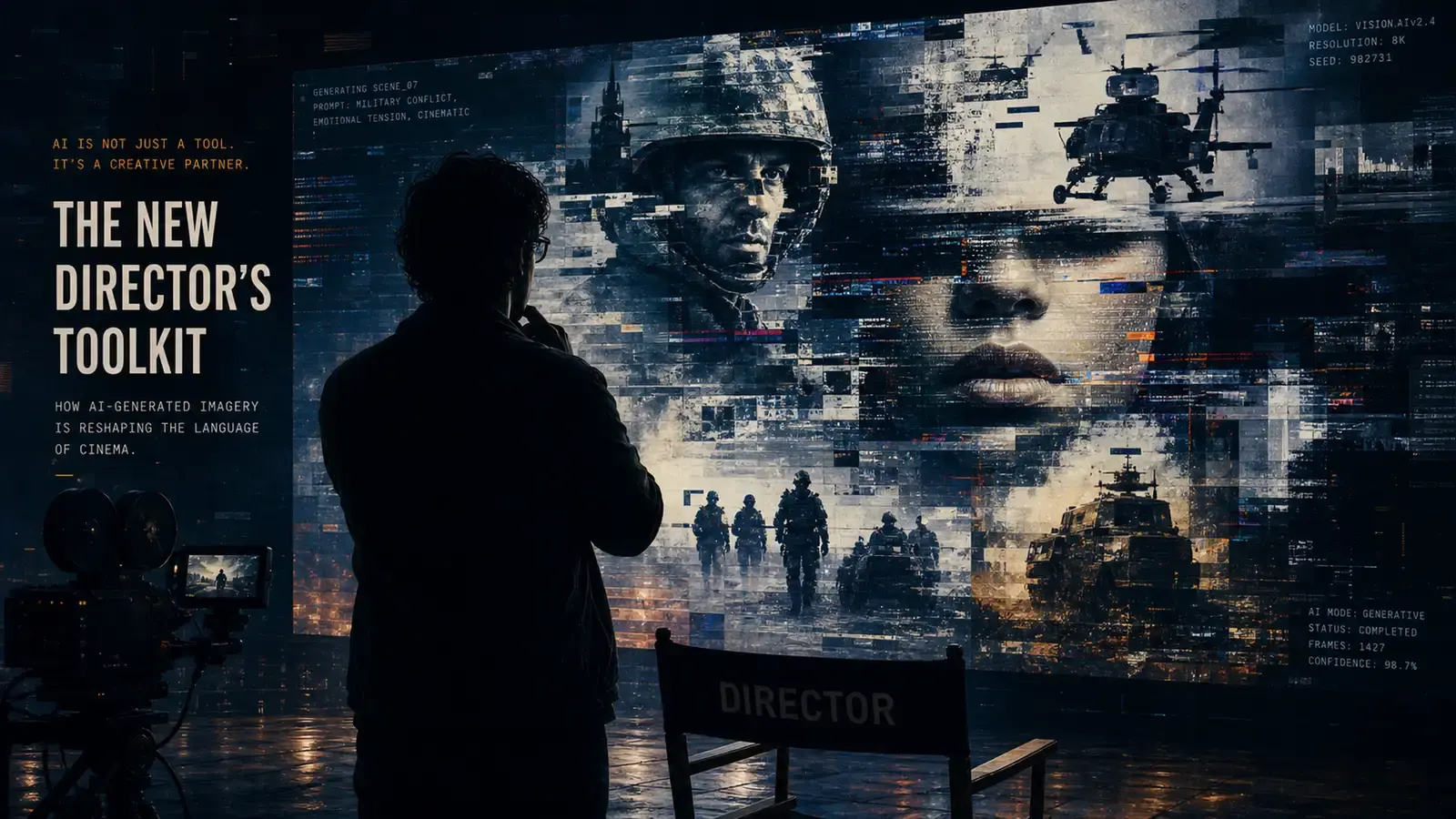
Neill Blomkamp has spent most of his career making movies about technology gone wrong. District 9 turned alien refugees into a metaphor for apartheid. Elysium imagined a future where the rich live on a space station while everyone else dies of preventable diseases on Earth. Chappie asked what happens when an AI develops a conscience — and then gets raised by Johannesburg gangsters.
There is something fitting, then, about the fact that Blomkamp is now the first major Hollywood director to release a short film made entirely with AI video generation. The 13-minute piece, titled Nightborne, dropped quietly last week and was built from scratch using Seedance 2.0, the latest iteration of the AI video model that has been turning heads since its initial release. Blomkamp did not announce it with a press tour or a festival premiere. He just posted it. Source
What ‘Nightborne’ actually is
The film is a sci-fi horror piece shot in a documentary style — grainy, handheld, found-footage aesthetic that will feel familiar to anyone who has seen District 9’s mockumentary opening. It follows a U.S. military pilot who is presumed dead after a mission goes wrong, only to discover he has been enrolled in a classified program that brings fallen soldiers back for combat. The premise is pure Blomkamp: military-industrial horror filtered through a personal lens, with the kind of grounded, grimy realism that has defined his work since the Halo: Landfall shorts he directed before breaking into features.
Every frame of the 13-minute runtime was generated through text prompts. Blomkamp did not point a camera at anything or anyone. He described what he wanted — the angle, the lighting, the composition, the movement — frame by frame, and Seedance 2.0 rendered it. The faces and voices of 32 real people appear in the film, all used under licensing agreements. This is a crucial detail: Blomkamp did not generate fake faces or synthetic voices. He licensed real human performances and composited them into AI-generated environments. Human artists created the concept art that guided the AI’s output, providing the visual blueprint that the model then executed. Source
Blomkamp described the project on social media as an experiment in understanding what AI filmmaking tools can and cannot do. He has not announced any plans to use AI in his feature work — his next project is a conventional production — but the existence of Nightborne, from a director with his visual pedigree and industry credibility, is a signal. The line between “AI-generated content” and “filmmaking” is getting harder to draw.
Why this matters more than the last AI short film you heard about
AI-generated short films are not new. Runway’s AI Film Festival has been running since 2023, showcasing work from independent creators who have been pushing text-to-video tools to their limits. There are entire YouTube channels dedicated to AI-generated narratives, some of them genuinely impressive in their ambition if not always their coherence. What makes Nightborne different is who made it and how he approached it.
Blomkamp is not an AI enthusiast experimenting with new tools on the side. He is a director with an Oscar nomination for Best Adapted Screenplay, a distinct visual style recognized internationally, and a reputation built on practical VFX and gritty realism. His last feature film, Gran Turismo, was a $100 million studio production for Sony. When someone at that level decides to spend real creative energy building a 13-minute film entirely through text-to-video generation — not as a stunt, not as a sponsored partnership, but as a genuine creative experiment — it changes the conversation. This is not a tech demo. This is a filmmaker testing whether a new tool can serve his vision, and publishing the results because he thinks they are worth seeing.
The choice of Seedance 2.0 specifically is also notable. We covered the model’s milestone release earlier this year in our analysis of Seedance 2.0’s capabilities, and at the time the open question was whether anyone with real filmmaking chops would take it seriously as a creative tool rather than a novelty. Blomkamp just answered that question, and he answered it by choosing Seedance over Runway, Pika, Sora, Kling, and every other AI video tool currently on the market. That says something about where the technology actually stands for serious production work.
What this means for the industry (and what it does not)
Let us be clear about what Nightborne is not. It is not a feature film. It is not a replacement for traditional production crews, sets, or lighting departments. Blomkamp still needed 32 real people for faces and voices. He still needed human concept artists to design the visual language. He still needed his own directorial eye to guide the thousands of text prompts that generated each individual frame and stitch them into something with pacing, tone, and emotional logic. What the AI replaced were the physical production elements: the camera, the set construction, the lighting rig, the location scouting, and portions of the post-production pipeline. It did not replace creative direction, and it did not replace human performance.
That distinction matters because the public conversation around AI filmmaking tends to oscillate between two positions that are both wrong. One side insists AI will replace all filmmakers, make cameras obsolete, and turn movie production into a solo activity anyone can do from their laptop. The other side dismisses AI-generated video as a gimmick that will never produce anything worth watching and will fade away once the hype cycle ends. Nightborne sits in the middle, and that is precisely why it is the most important AI video project to date. It demonstrates that a skilled director — someone who already knows how to compose a shot, build tension, and guide an audience through a narrative — can use AI video tools to produce something that looks and feels like a real film. Not a tech demo. Not a proof of concept. An actual short with narrative structure, atmospheric control, and intentional visual design.
The documentary style was a smart choice for a first experiment, and it is worth understanding why. Found-footage aesthetics forgive the kinds of artifacts and inconsistencies that AI video generation still struggles with — the slight temporal instability between frames, the occasional morphing of background details, the uncanny smoothness that signals “this was not filmed.” A grainy, handheld shot of a military hangar reads as authentic in a way that a perfectly lit, smooth close-up of a face would not. Blomkamp understood the tool’s limitations and worked with them rather than against them. That is what directors do: they work with the tools they have and make choices that turn limitations into strengths.
The licensing piece nobody is talking about enough
One detail in the reporting deserves more attention than it has received: the 32 people whose faces and voices appear in the film were compensated under licensing agreements. Their likenesses were not generated. They were not scraped from publicly available footage or social media profiles. They were real people who agreed to appear in the film and were paid for it. Source
This is significant because actor likeness rights have become one of the most contentious issues in the AI industry. The 2023 SAG-AFTRA strike centered heavily on AI — specifically, the fear that studios would scan background actors once, pay them for a day, and then use their digital likenesses in perpetuity without additional compensation. The union won significant protections in the contract that ended the strike, but the underlying tension has not gone away. Every new AI video model that launches raises the same question: whose data trained it, and were they asked?
Blomkamp’s approach suggests a possible compromise: use AI generation for the visual environment, compositing, and environmental elements, but license real human performances for faces and voices. Whether that model scales to feature-length productions — where you might need hundreds of distinct faces rather than 32 — is an open question. But it is at least a framework that treats performers as collaborators rather than raw material. In an industry where AI companies have been caught training on copyrighted films without permission, any project that leads with “we licensed the faces” is making a statement just by existing.
We have tracked similar ethical fault lines in our coverage of AI image generation and consent debates. The tension between creative capability and performer rights is not going to resolve itself. Projects like Nightborne at least demonstrate that you can push the technology forward without pretending the ethical questions do not exist.
The bottom line
Nightborne is 13 minutes long and probably will not screen at Cannes. It is a short film on the internet, made by a director experimenting with a tool. The reason it matters is not what it is but what it makes possible. A director with an Oscar nomination, a $100 million studio film on his resume, and one of the most distinctive visual styles in contemporary science fiction looked at the current state of AI video generation and decided it was worth his time. He did not use it to make a tech demo. He used it to make a film.
The bar for AI video just moved. Not because the technology improved — Seedance 2.0 was already capable of this level of output — but because someone who actually knows how to direct, someone who has spent two decades building a visual language that audiences recognize, decided to take it seriously and show his work. That is a different kind of milestone than a benchmark score or a flashy demo reel. It is the difference between a tool existing and a tool being used by people who know what to do with it.
Nightborne is available to watch right now on Blomkamp’s official channels. The 13-minute runtime is short enough to fit into a lunch break, and long enough to get a real sense of what this workflow can produce when someone who knows what they are doing is at the controls. For more on the technology driving projects like this, see our deep dive on Seedance 2.0 and our broader survey of AI video generation tools.
Reader Dispatches
No reader responses yet. Share your technical perspective below.
Related Posts
Meta Muse Image: The Social Media Giant's First AIGC Model Arrives with a Privacy Catch
Meta Superintelligence Labs launches Muse Image, its first in-house AI image generator. Free, integrated across Instagram and WhatsApp, and built to reason through prompts — but the way it taps into public Instagram photos has raised eyebrows.
The AI Copyright Reckoning: Anthropic's $1.5B Payout and Reddit's Fight Against Perplexity
Two landmark cases in one week are reshaping who owns the data that trained the models we use every day.
Suno Got Hacked — and the Leaked Source Code Shows Exactly How It Trained on Millions of Copyrighted Songs
A supply chain attack on AI music generator Suno exposed source code revealing systematic scraping of YouTube Music, Deezer, and Genius for training data. The breach also leaked customer information — and Suno never told anyone.