Runway Doubled ARR in Five Months. The Video Tool Is the Side Door
Germanidis said Runway went from about $100 million ARR in April to $200 million in September. The same day, the Kinetix team in Paris joined to work on robotics. Enterprise video is the invoice. World models are the pitch.
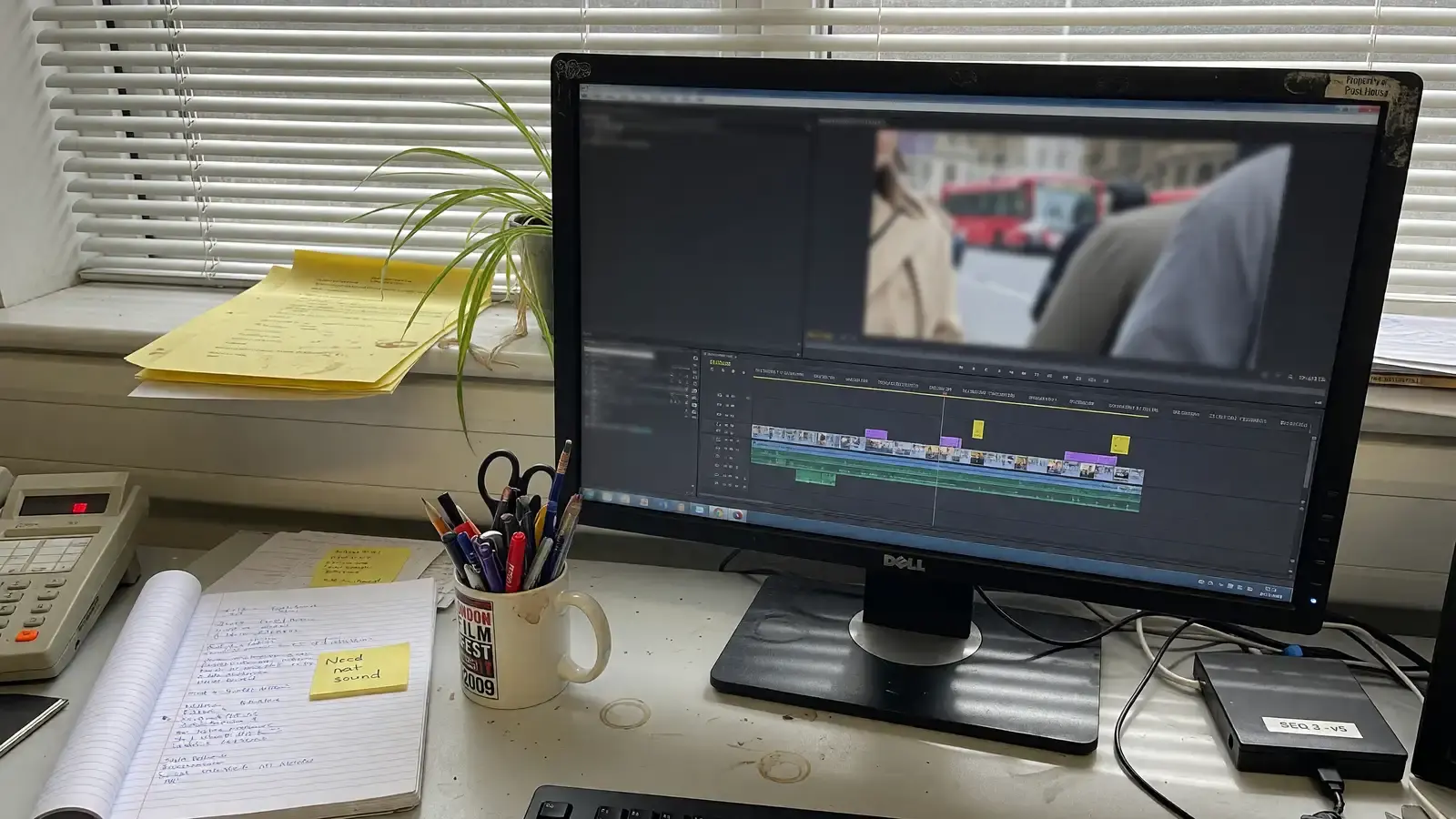
Anastasis Germanidis said the quiet number out loud on 8 September. Runway’s annual recurring revenue went from about $100 million in April to $200 million in September. That is a double in roughly five months. He put it on LinkedIn and in a Bloomberg interview the same day. TechTimes recaps both.
The same day, the company said the team from Kinetix, a Paris lab that works on 3D human motion and physically grounded video, is joining Runway to speed up robotics and world-model work. Revenue and a robotics hire in one morning is not a coincidence. It is a story about what “generative video” means when the customer is no longer a YouTuber.
We have been writing the AIGC file all year, including how far AI short drama has already gone on Douyin. Runway is the other stack. Western enterprise video, API access, and now a motion lab. This is not a product tutorial. It is a look at the invoice.
The numbers that are sourced, and the ones that are a person familiar
TechTimes is doing secondary reporting. Treat it that way. Sacra, via Crypto Briefing, had Runway at an estimated $84 million ARR at the end of 2024. Q2 2026 added $40 million in net new ARR, which the piece notes would be a full year for a lot of SaaS shops. Germanidis’s own arc is April ~$100 million to September $200 million. Bloomberg, citing a person familiar with the matter, says the company expects to surpass $350 million ARR before the end of 2026.
Those are three different kinds of fact. End-2024 is an estimate from an outside firm. April-to-September is a founder. $350 million is an unnamed source. The only number I would take into a budget meeting is the founder’s double, because he said it in public with his name on it. The $350 million is a target someone wanted in the story.
Series E is firmer. February 2026, $315 million, General Atlantic leading, $5.3 billion valuation. TechTimes says that brought total funding to $860 million across seven rounds, and that the Series E was 37 percent of all capital raised. That last percentage is arithmetic on their figures. It tells you the company took a huge check this year relative to its whole history. It does not tell you the check is earning its keep. ARR doubling after a $315 million round is the beginning of that argument, not the end.
The headline also says enterprise video adoption triples existing spend. That is a customer-behavior claim. The body of the TechTimes piece is thinner on the methodology than on the ARR. Read “triples” as a vendor-flavored observation unless Runway publishes the cohort. What you can say without the cohort: they launched Runway Dev in July 2026, a developer platform that puts the model stack behind one API endpoint. APIs are how you get from a web UI to a line item in someone else’s cloud bill. That is the boring path from “cool demo” to “$200 million.”
Kinetix is the tell
Kinetix is not a filter pack. TechTimes describes a Paris AI research lab focused on 3D human motion and physically grounded video generation, joining to accelerate world-model robotics work. Dealroom’s same-week headline called it a buy. The TechTimes language is “the team from … is joining.” The function is clear. Runway wants bodies that move like bodies, not like a diffusion smear.
Physically grounded video is a phrase people throw at anything with a shadow. In a robotics context it means the clip should be consistent with contact, weight, and time, because a policy that trains on impossible motion will fail on a real floor. That is a different product than “make this B-roll look like a car commercial.” If you make ads, you may not care. If you are a lab trying to get a humanoid to walk without inventing extra knees, you care a lot.
This is why the ARR story and the Paris story belong together. A video company that only sells clips to marketers has a ceiling. A video company that sells a world model into robotics can tell a Series E story that is not “more presets.” Whether they can deliver that is a 2027 question. 8 September was the announcement.
Who is paying
Consumer tools grow on monthly seats and viral clips. Enterprise tools grow when a media team, a retailer, or a games studio stops buying stock and starts hitting an API. “Triples existing spend” is what a sales org says when a customer who bought a sandbox comes back with production volume. Sometimes that is true. Sometimes it is three teams on one contract.
Runway Dev in July is the artifact I trust more than the adjective. A single endpoint for the model stack is how you get procurement to stop treating the product as a design toy. It is also how you get security review. If you are a buyer, ask for data-retention terms, training opt-out, and a content provenance story before you put the API on a campaign that has a lawyer. The ARR number does not answer those. The contract does.
For people who still use the web UI to generate a five-second insert, none of this changes Friday. The render queue does not care that ARR doubled. The change is who sits in the roadmap meeting. Robotics and world models pull engineering away from the consumer timeline. That can be good if the motion quality in the editor gets better as a side effect. It can be bad if the editor becomes a demo for the other product.
What this is not
It is not proof that generative video is profitable. ARR is not profit. A $5.3 billion valuation is not cash in the bank that you can spend twice. A five-month double after a giant round can be real demand. It can also be a land grab with discounting. Germanidis did not publish net revenue retention or gross margin in the recap I have. Without those, celebrate the double as a demand signal and stop there.
It is not a reason to dump every other video model. Google, OpenAI, and the Chinese short-drama stack are not in this press cycle. We already mapped Douyin’s AI-made ranking problem. Different market, different invoice. Runway’s $200 million is a Western enterprise-and-prosumer number. It does not tell you who wins TikTok.
It is not a how-to. If you wanted prompts, this is the wrong page. If you wanted to know why your vendor started talking about robots in the same week as a revenue screenshot, this is the page.
How to read the next six months
Watch whether Runway Dev shows up in other companies’ engineering blogs as a dependency, not just in Runway’s own announcements. Watch whether Kinetix work appears as a named motion model or disappears into “physical AI” slides. Watch whether the $350 million rumor gets restated by the company with a name on it. Unnamed Bloomberg math is not a KPI.
Also watch the labor story, which this recap does not include. Video tools at this scale change who gets hired on a production. That fight is downstream of the API, not of the ARR tweet. We will get to it when there is a contract, a union note, or a studio memo, not because a valuation needs a moral.
A note on the $40 million of net new ARR in Q2. TechTimes frames that as a year of work for a lot of SaaS companies, which is a comparison, not a benchmark you can take to finance. Net new ARR can be new logos, expansion, or a one-time true-up. The recap does not split them. If you are modeling Runway, you need that split. If you are just trying to understand why the homepage started talking about robots, you do not. You need the April-to-September double and the Paris hire.
Runway Dev as a single endpoint also changes how you think about rate limits and abuse. A web UI has a human in the loop. An API has a cron job. The jump from $100 million to $200 million in five months is easier to believe if a handful of customers pointed pipelines at Dev after July. It is also easier to believe if sales discounted annual contracts to print the screenshot. Both can be true. Neither is in the TechTimes piece as a table.
I keep coming back to physically grounded motion because that is the part that will leak into the consumer editor or it will not. If Kinetix work shows up as fewer broken elbows in a five-second clip, marketers will feel it and never learn the lab’s name. If it only shows up in a robotics keynote, the people paying for B-roll will wonder why the roadmap froze. Five months is long enough to double ARR. It is not long enough to finish a world model. Do not confuse the press cycle.
For now the facts are small and solid. April to September, about $100 million to $200 million, founder on the record. Paris motion team in the building. An API product from July. A February round that was huge. The rest is a trajectory someone would like you to believe. You can wait for the next number. The clips will still render either way.
Reader Dispatches
No reader responses yet. Share your technical perspective below.
Related Posts
Higgsfield used GPT-6 Astra to ship video ads without a reshoot
OpenAI's Sept 21 note: 100 ad variants from one prompt, and one engineer shipping a feature in a day. Object swaps are the useful part. The 'in a day' line is the part to test.
89 of Douyin's Top Dramas Are Now AI-Made
DataEye says 89 of Douyin's top 100 dramas in May were AI-generated. China's Q1 short-drama flood is 95% synthetic. The hit rate is brutal.
AI Image Generators Compared: Midjourney vs OpenAI Image Generation vs Stable Diffusion
How Midjourney, OpenAI's image generation in ChatGPT and the API, and open-weight Stable Diffusion differ in workflow, control, licensing and cost model, based on official documentation, with a guide to choosing.