The $1.25 Trillion Singularity: Why Musk Merged SpaceX and xAI (And The Physics of Orbital Compute)
Musk merged SpaceX and xAI into a $1.25T behemoth. We analyze the engineering reality of 'Orbital Data Centers,' the physics of cooling chips in space, and whether this is genius or bailout.
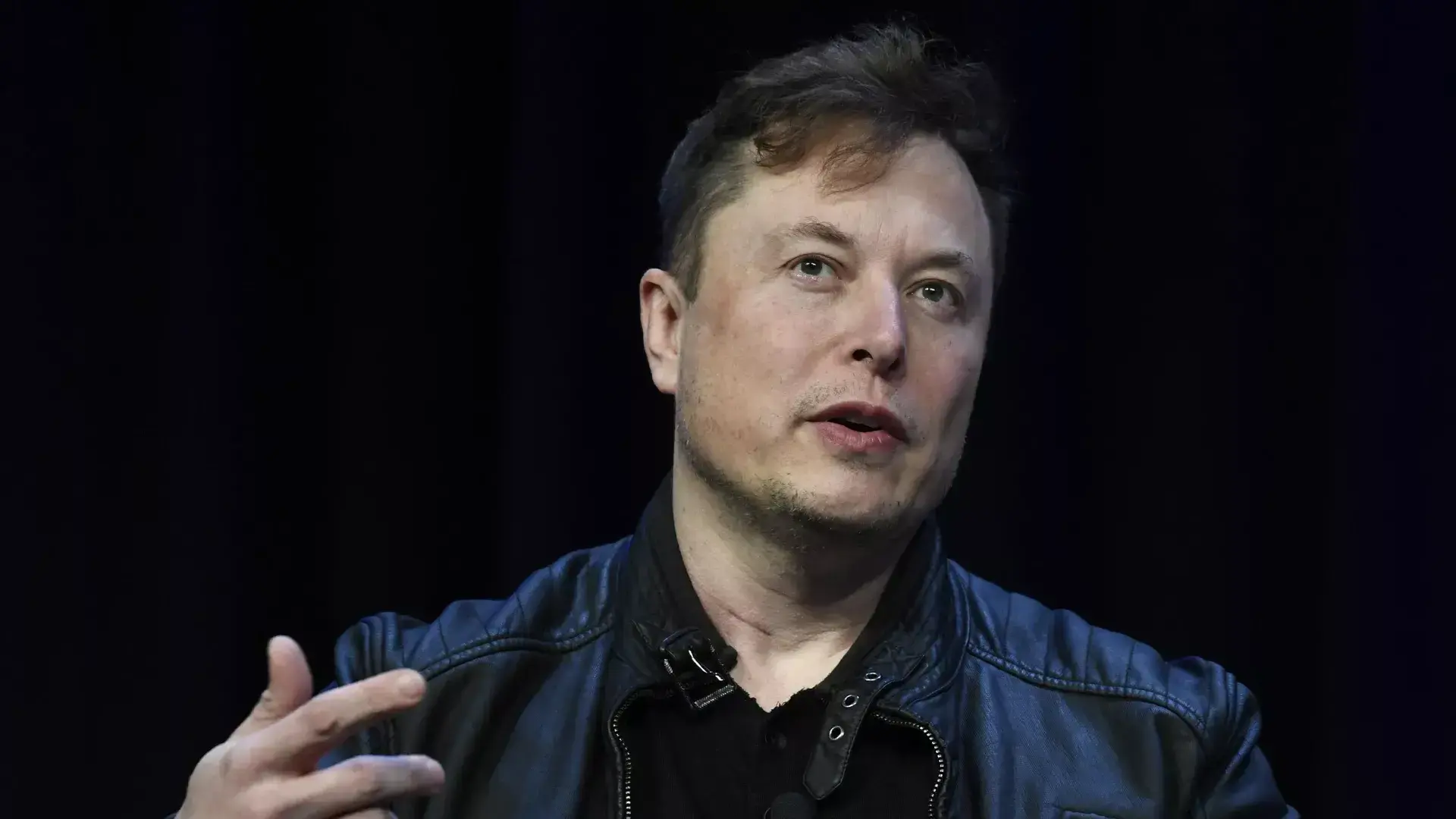
It finally happened. The rumor mill had been churning for weeks, but the confirmation hit like a sonic boom over Boca Chica. Elon Musk has officially merged his aerospace juggernaut, SpaceX, with his artificial intelligence challenger, xAI.
The result? A $1.25 trillion vertically integrated monster that aims to control everything from the silicon that thinks to the rockets that launch it.
If you read the headlines, you saw the numbers: a projected share price of $526.59 and a combined valuation that rivals the GDP of a mid-sized nation. Stop at the financial headlines and you miss the real story. This isn’t about an IPO. This is Musk attempting to brute-force the Kardashev Scale.
In a leaked internal memo, Musk didn’t talk about EBITDA or quarterly projections. He talked about creating a “sentient Sun” and spreading the “light of consciousness to the stars.”
Time to cut through the reality distortion field. What does this mean for the tech stack, the physics of putting GPUs in a vacuum, and whether this is the boldest engineering project in history or a massive financial shell game?
The “Sentient Sun”: A Vision or a Hallucination?
Musk’s memo was characteristically grandiose. He described the merger as creating the “most ambitious, vertically integrated innovation engine on Earth (and off it).”
The core thesis is simple but radical: Earth is too small for AGI.
Current AI models are power-hungry beasts. Training a GPT-4 class model consumes gigawatt-hours of energy. As we scale to Grok 3, GPT-5, and beyond, the power grid becomes the bottleneck. Musk’s solution: Orbital Data Centers.
“Deploying one million satellites to build an orbital data center is our first step toward a Kardashev Type II civilization… capable of fully utilizing the sun’s energy.” - Elon Musk, Internal Memo
The plan involves launching 1 million satellites. Musk estimates that if SpaceX launches “million-ton class” satellites annually, they can add 100GW of AI compute capacity per year.
For context: The entire current power consumption of the United States is roughly 450-500 GW on average. Musk wants to launch 20% of the US grid’s capacity into orbit every year.
The “1+1 > 2” Logic
Why merge? Why not keep them partners?
The Cash Burn: xAI is expensive. Rumors suggest it burns nearly $1 billion a month. While it raised $6 billion recently, the capital intensity of the AI wars is unsustainable for a standalone startup without a revenue hose like Google Search or Azure.
The Cash Cow: SpaceX is profitable. Starlink is a money-printing machine. By merging, Musk stabilizes xAI’s finances using SpaceX’s balance sheet, effectively “bailing out” his own AI ambition before it runs out of runway.
The Launch Cost: If you are going to launch 1 million server-satellites, you cannot pay retail prices for launch. You need to own the rocket company.
The Physics of Space Compute: It’s Not That Simple
Put on your engineering hat. Musk claims space is the “lowest cost place” for AI because of unlimited solar power and natural cooling (space is cold).
Is it, though?
The thermodynamics tell a different story. This is the part the financial analysts skip.
The “Space is Cold” Fallacy
Yes, the background temperature of space is roughly 2.7 Kelvin (-270°C). However, space is a vacuum. A vacuum is the world’s best insulator (that’s how your thermos works).
On Earth, data centers use convection (fans blowing air) and conduction (water cooling loops) to move heat away from GPUs. In space, there is no air. You cannot use fans. You cannot use river water.
The only way to get rid of heat in space is Thermal Radiation.
The Stefan-Boltzmann law governs this: $$ P = \epsilon \sigma A (T^4 - T_c^4) $$
Where:
- $P$ is power radiated (Heat).
- $A$ is the surface area of the radiator.
- $T$ is the temperature of the radiator.
To cool a massive H100 cluster in space, you need massive radiators. If you pack 100kW of compute into a satellite, you need a radiator surface area roughly the size of a tennis court, glowing hot, to keep the chips from melting.
Simulation: The Thermal Bottleneck
A quick Python simulation shows how much radiator area we need for a single “Star-Server” unit running a cluster of NVIDIA H100s (or Musk’s custom silicon).
import math

# Constants
STEFAN_BOLTZMANN = 5.67e-8  # W/m^2/K^4
EMISSIVITY = 0.9            # High efficiency radiator paint
SOLAR_FLUX = 1361           # W/m^2 (Sunlight hitting the satellite)

def calculate_radiator_area(power_watts, max_temp_celsius):
    """
    Calculates required radiator area for a space server.
    Assumes the radiator is facing deep space (0K approx) and
    shielded from the sun.
    """
    # Convert C to Kelvin
    max_temp_k = max_temp_celsius + 273.15

    # Power radiated per square meter (P/A = εσT^4)
    # We ignore T_cold because 2.7K is negligible compared to chip temp
    power_per_m2 = EMISSIVITY * STEFAN_BOLTZMANN * (max_temp_k ** 4)

    required_area = power_watts / power_per_m2
    return required_area

# Scenario: A single rack of 8x H100 GPUs
# Approx 700W per GPU + CPU + Networking overhead ~= 10kW total
server_power = 10000  # Watts

# Max operating temp for radiator (chips run hotter, but heat pipes lose temp)
# We'll keep the radiator at 60°C (333K)
radiator_temp = 60

area = calculate_radiator_area(server_power, radiator_temp)

print(f"--- Orbital Server Thermal Analysis ---")
print(f"Target Power Dissipation: {server_power/1000} kW")
print(f"Radiator Temperature: {radiator_temp}°C")
print(f"Required Radiator Area: {area:.2f} m^2")

# Comparison: Starlink v2 mini solar array is roughly 100 m^2?
# (Estimates vary, but for comparison)
print(f"Equivalent to {(area/261):.4f} tennis courts (singles).")
The Output Reality: To cool 10kW (a tiny fraction of a modern data center row), you need about 15-20 square meters of radiator surface area pointing at deep space.
Now, scale that to 100GW. You are talking about building a Dyson Swarm of radiators. The engineering challenge isn’t generating the power (solar is easy); it’s dumping the waste heat without melting the satellite.
The Radiation Problem
Space is also radioactive. The Van Allen belts and cosmic rays wreak havoc on silicon.
- Bit Flips: Cosmic rays cause bits in memory to flip from 0 to 1.
- Latch-ups: High-energy particles can cause short circuits.
Standard ECC (Error Correction Code) RAM isn’t enough. You need “Rad-Hard” (Radiation Hardened) chips, which are 3-4 generations behind consumer tech and 10x more expensive. Or, you use software redundancy (Triple Modular Redundancy), which cuts your effective compute by 66%.
Musk’s likely bet: He will use standard consumer silicon (like he did with Starlink) and rely on the sheer volume of satellites to handle failures. If 10% of the nodes fry every month, launch more.
The Infrastructure: Starshield & The Orbital Cloud
This merger implies a new kind of cloud architecture. We aren’t talking about us-east-1 anymore. We are talking about leo-orbit-1.
How do you manage a Kubernetes cluster where nodes are flying at 27,000 km/h and constantly disconnecting?
Latency vs. Throughput
- Training: High bandwidth, latency insensitive. You can upload a massive dataset to orbit, let the satellites crunch for a week, and download the weights. This works.
- Inference: Latency sensitive. If I ask Grok a question, I don’t want the signal to bounce through 5 satellites. Starlink has proven that LEO latency (20-40ms) is competitive with fiber.
A Mock “Space-Native” Config
Imagine a future where Terraform providers include orbital parameters.
# Hypothetical Terraform configuration for SpaceX/xAI Cloud

resource "spacex_orbital_cluster" "grok_training_cluster" {
  constellation = "starshield-compute-v1"

  # Orbital parameters
  altitude_km   = 550
  inclination   = 53

  # Compute resources
  node_count    = 5000
  instance_type = "starship.h200.metal"

  # Thermal Management Strategy
  thermal_policy = "aggressive_sun_avoidance"

  # Networking
  inter_satellite_link = true
  ground_station_region = ["boca-chica", "cape-canaveral"]

  # Redundancy for Radiation
  redundancy_mode = "tmr" # Triple Modular Redundancy
}

output "cluster_status" {
  value = "Deploying to Low Earth Orbit. ETA: T-minus 48 hours."
}
The Financial & Strategic Verdict
Step back from the sci-fi and look at the business strategy.
1. The IPO Super-Vehicle SpaceX was already the most anticipated IPO of the decade. By folding in xAI, Musk creates a “meme stock” singularity. Investors aren’t buying rockets; they are buying the future of AGI. It justifies a valuation that traditional metrics (P/E ratio) cannot touch.
2. Vertical Integration as a Moat Google has TPUs. Amazon has Trainium. Microsoft has Maia. Musk now has:
- Chips: Dojo / xAI custom silicon.
- Data Center: Starlink/Starshield satellites.
- Power: Solar (in space).
- Logistics: Starship.
No other company can compete with this stack. Amazon has Kuiper (satellites) and AWS (AI), but they rely on Blue Origin (years behind) or ULA for launches. Musk owns the entire supply chain.
3. The “Too Big to Fail” Defense By intertwining the US space infrastructure (SpaceX is critical to NASA and the DoD) with his AI ventures, Musk insulates xAI from regulatory crackdowns. You can’t shut down the AI company without hurting the national space program.
Conclusion: The Gamble of the Century
Is the “Sentient Sun” hyperbole? Absolutely. Is the physics of space cooling hard? Yes. Is this merger a financial maneuver to cover xAI’s burn rate? Likely.
But Elon Musk bets on physics, not market trends.
If Starship works as intended (dropping launch costs to $10/kg), the economics of space change fundamentally. At that price point, you can launch massive radiators. You can launch disposable supercomputers.
We are witnessing the birth of the first Solar System Corporation. Whether it ends in a $1.25 trillion empire or a spectacular orbital debris field remains to be seen. But one thing is certain: the data center industry got a lot more interesting.
References:
Reader Dispatches
No reader responses yet. Share your technical perspective below.
Related Posts
NVIDIA's $2B Bet on CoreWeave: The 5GW Gamble and the End of the x86 Era
NVIDIA's $2B investment in CoreWeave aims to build 5GW of AI factory capacity by 2030. We analyze the 'revenue round-tripping' controversy and NVIDIA's declaration of war on Intel via the Vera CPU.
Google's Project Genie: The $250/Month 'Matrix' Simulator That Isn't a Game Engine
Google DeepMind's Genie 3 allows you to generate playable worlds from a single image, but the hardware constraints and the steep 'AI Ultra' subscription price raise questions about its viability. Here is a technical deep dive into the future of generative environments.
The End of the Affair: Why OpenAI is Killing GPT-4o Right Before Valentine's Day
OpenAI has announced the retirement of GPT-4o and legacy models on February 13, 2026. We analyze the technical shift from 'emotional' AI to 'logical' AI, the backlash from users who lost their digital companions, and how to replicate the GPT-4o personality using system prompts in the new GPT-5.2 era.