AI's Carbon Problem Is Bigger Than Anyone Admits
Training a single AI model now emits more CO₂ than some countries produce in a year. Stanford's 2026 AI Index reveals the environmental cost of the compute arms race.
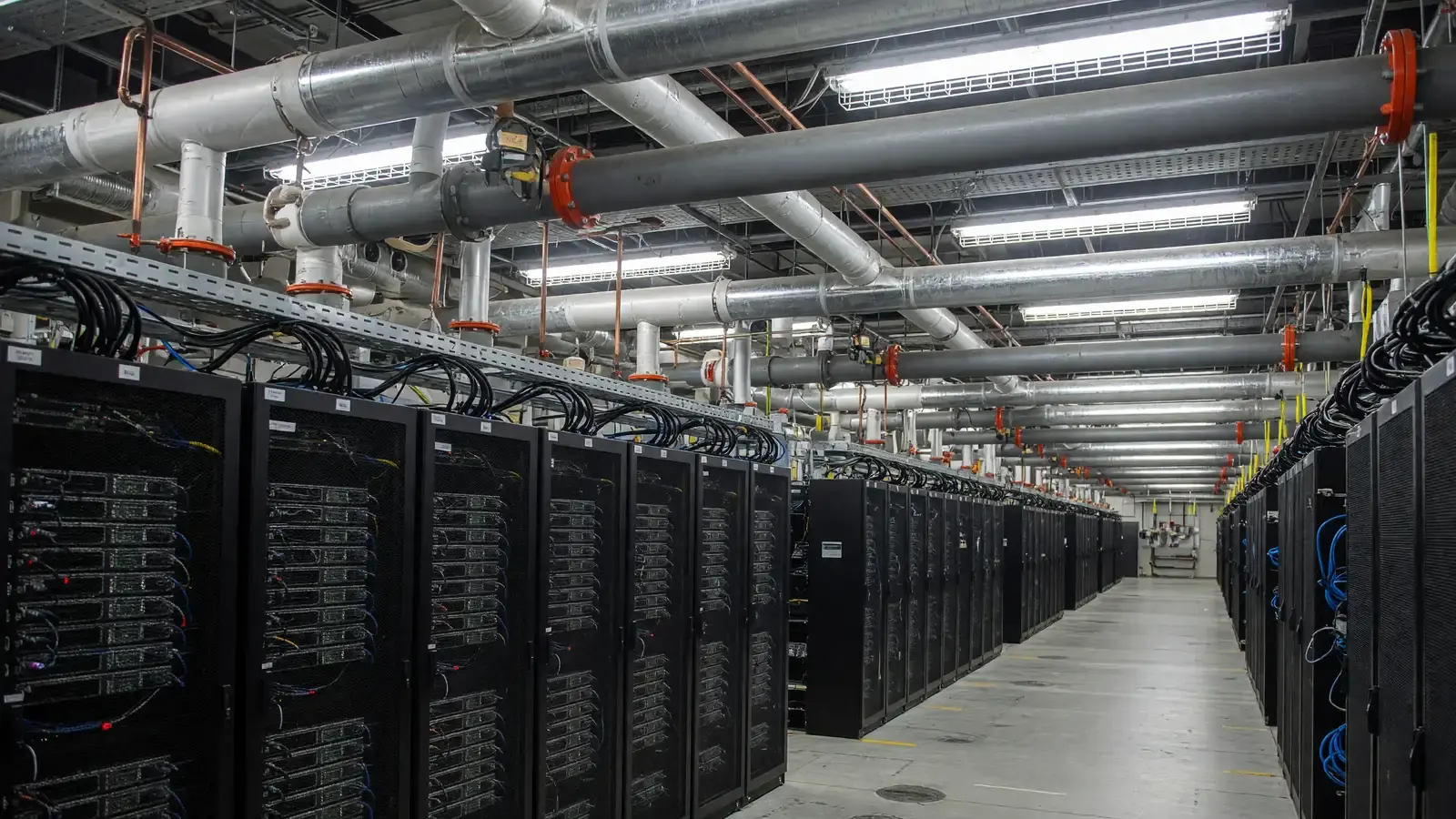
The AI industry is burning through capital and carbon at a pace that makes both Wall Street and environmental scientists uncomfortable. According to Stanford’s 2026 AI Index, the world’s AI compute capacity has grown 3.3x annually since 2022 — a 30-fold increase in just four years. Meanwhile, training a single frontier model now generates enough carbon emissions to rival the annual output of a small nation.
This isn’t a theoretical problem. It’s happening right now, and the numbers are staggering.
The Numbers That Should Alarm Everyone
Let’s start with what Stanford’s AI Index actually measured. The report, now in its fifth year, tracks the carbon footprint of training large language models using estimates from Epoch AI and other research groups. The trajectory is grim.
xAI’s Grok 4, the most recent frontier model to be analyzed, is estimated to produce over 72,000 tons of CO₂-equivalent emissions during training. Epoch AI’s independent assessment puts the figure even higher — around 140,000 tons. To put that in perspective: the average American produces about 16 tons of CO₂ per year. Training Grok 4 once generates the equivalent of 4,500 Americans living for a year.
The numbers stack up fast. GPT-4, released in 2023, was estimated at 5,184 tons. Meta’s Llama 3.1 405B, released in 2024, hit 8,930 tons. By the time we reach Grok 4 in 2025-2026, the figure has jumped more than 13x from GPT-4’s baseline. Each generation of models isn’t just marginally more expensive to train — it’s exponentially more carbon-intensive.
And that’s just training. Inference — the process of actually running these models to answer queries — adds another layer of emissions that compounds daily. Stanford’s data shows that the least efficient inference models emit over 10 times more carbon per query than the most efficient ones. DeepSeek’s V3 models consume approximately 23 watts for a medium-length prompt, while Anthropic’s Claude 4 Opus uses roughly 5 watts. That gap matters when you’re running millions of queries per day.
Why Compute Is Growing Faster Than Anyone Predicted
The carbon emissions problem is downstream of a more fundamental issue: the sheer scale of AI compute being deployed worldwide. Epoch AI, which tracks global compute capacity, reports that the world’s AI compute has grown 30-fold since 2021 — the first year they began systematic measurement.
Nvidia’s GPUs now account for over 60 percent of all AI compute capacity globally. Amazon and Google, each designing their own custom silicon, round out the top three. But the total pie keeps expanding. Big Tech companies are projected to spend nearly $700 billion on AI infrastructure in 2026, with no clear endpoint in sight.
This creates a feedback loop. More compute means more training runs, more experiments, more model iterations. Each iteration consumes energy. Each energy consumption generates emissions. And the market demands that these companies keep pushing — because falling behind in the AI race has consequences that boards of directors care about far more than carbon accounting.
The Stanford AI Index also reveals that nearly all notable model releases now come from industry rather than academia. In 2025, organizations based in the United States released 50 notable models, with China closing the gap rapidly. This industrialization of AI development means the carbon cost isn’t spread across a few research labs — it’s concentrated in the world’s largest corporations, each racing to outspend the others.
The ROI Disconnect Makes It Worse
This is where the environmental cost gets hard to justify from a policy perspective. If AI were delivering massive economic value across the board, the carbon emissions might be justifiable as the cost of a transformative technology — much like the carbon cost of semiconductor fabs or pharmaceutical manufacturing.
But PwC’s 2026 CEO Survey, which polled 4,454 chief executives across 95 countries, tells a different story. More than half — 56 percent — report zero financial impact from their AI investments. Not reduced impact. Not slower-than-expected returns. Zero. Only 12 percent of companies, which PwC labels the “Vanguard,” have successfully used AI to both cut costs and grow revenue.
This creates an uncomfortable calculus. The world is generating tens of thousands of tons of CO₂ to train models that most enterprises can’t figure out how to monetize. The environmental cost is real and measurable. The economic benefit, for the majority of AI adopters, remains theoretical.
PwC identifies the root cause as “isolated, tactical AI projects” that companies bolt onto existing workflows rather than rebuilding processes around AI capabilities. The result is what the report diplomatically calls pilot purgatory — AI gets used enough to feel like progress, but never deeply enough to create results. Meanwhile, the carbon keeps accumulating.
What the Efficiency Gains Don’t Solve
The AI industry’s standard response to carbon concerns points to efficiency improvements, and there’s substance to this argument. The energy cost per inference has dropped significantly with each hardware generation. New model architectures require fewer parameters to achieve similar capabilities. Quantization techniques allow models to run on less powerful hardware.
But efficiency gains are fighting a losing battle against scale. Even if each individual query becomes 10x cheaper to run, the total number of queries is growing faster than that. ChatGPT alone processes billions of requests per month. Every new AI-powered feature added to Google Search, Microsoft Office, or Apple’s ecosystem multiplies the inference load.
The Stanford AI Index data on inference emissions illustrates this clearly. Claude 4 Opus runs at 5 watts per medium prompt, but the growing volume of AI interactions means total inference emissions keep climbing anyway. It’s the Jevons paradox applied to AI: making something more efficient often increases total consumption rather than decreasing it.
There’s also the geographic dimension. Data centers powering AI workloads are concentrated in specific regions, often drawing from local power grids that may still rely heavily on fossil fuels. The carbon intensity of AI compute varies dramatically depending on where the servers physically sit and what energy sources they tap.
The Regulatory Gap
Environmental regulations haven’t caught up with AI’s carbon footprint. Traditional environmental reporting frameworks — like the SEC’s climate disclosure rules or the EU’s Corporate Sustainability Reporting Directive — weren’t designed for the unique characteristics of AI compute emissions.
Training a frontier model involves distributed computing across thousands of GPUs, often spread across multiple data centers in different jurisdictions. The carbon footprint of a single training run might touch energy providers in Texas, cooling systems in the Nordics, and manufacturing emissions from chip fabrication in Taiwan. No single regulatory body captures the full picture.
Some jurisdictions are starting to respond. Local governments in the United States have begun restricting or outright banning new data center development in certain areas, citing both energy consumption and environmental impact. But these are piecemeal responses to a systemic problem.
The European Union’s AI Act addresses many aspects of AI governance but doesn’t directly tackle environmental externalities. There’s no equivalent of fuel economy standards for AI compute, no carbon tax specifically targeting the energy cost of training or inference.
What Meaningful Action Would Look Like
Addressing AI’s carbon problem requires interventions at multiple levels. At the model development stage, transparency about training compute and emissions — similar to nutritional labels on food — would allow the market and regulators to assess the true cost of frontier models. Today, most companies disclose almost nothing about the energy consumed during training, making it impossible for external observers to compare the environmental cost of one model versus another.
At the infrastructure level, commitments to renewable energy procurement for data centers are necessary but insufficient. The issue isn’t just where the electricity comes from — it’s the total quantity being consumed. Even a data center running entirely on wind power still displaces that renewable energy from other potential uses. The question isn’t whether the electrons are clean — it’s whether those electrons are being used for something that justifies their consumption.
At the industry level, the current arms race dynamic — where companies race to build ever-larger models because competitors are doing the same — creates perverse incentives against efficiency. If a company can gain market share by training a bigger, more carbon-intensive model, the environmental cost becomes a competitive advantage rather than a liability. Breaking this cycle requires either collective action through industry standards or regulatory intervention that internalizes the environmental cost of compute.
The PwC data adds another dimension to this problem. If 56 percent of enterprises are seeing zero ROI from AI, the societal cost of their compute consumption is difficult to justify. Redirecting even a fraction of that wasted compute toward genuinely valuable applications would reduce emissions without sacrificing progress. The environmental crisis and the economic inefficiency crisis are, in many ways, the same problem viewed from different angles.
What Would Actually Help
AI isn’t going away, and neither is its carbon footprint. The question is whether the industry and its regulators will treat emissions as a serious constraint or continue to externalize the cost.
Stanford’s AI Index provides the data. The 30-fold increase in compute capacity since 2021, the exponential growth in training emissions, the widening gap between efficient and inefficient inference — these are facts, not projections. The PwC CEO Survey adds the economic context: most of this carbon-intensive investment isn’t producing returns.
The technology itself offers some paths forward. Smaller, more efficient models — like the trend toward distilled and quantized versions of frontier models — can deliver comparable performance at a fraction of the carbon cost. Industry-level compute sharing, rather than each company maintaining its own massive infrastructure, could reduce total energy consumption.
But these solutions require coordination in an industry built on competition. Until the incentives change — through regulation, market pressure, or genuine breakthroughs in energy-efficient computing — the carbon will keep accumulating. And the 30-fold growth in compute capacity will keep accelerating.
The AI industry has a carbon problem. It’s bigger than anyone admits, and fixing it means more than efficiency tweaks. It means confronting the true cost of building artificial intelligence.
Sources: Stanford HAI AI Index Report 2026 via IEEE Spectrum, PwC CEO Survey 2026 via AI Shortcut Lab, Fortune reporting on Big Tech AI spending.
Related reading: Enterprise AI Is Spending Big. The Returns Are Not Following. | AI Investment in 2026: From Chip Hoarding to Energy Hunger
Reader Dispatches
No reader responses yet. Share your technical perspective below.
Related Posts
The Open Source AI Price War: How Competition Is Rewriting the Rules in 2026
GPT-4 pricing dropped from $30 to $1-2 per million tokens. What's driving the collapse, and what does it mean for developers building with AI?
AI Coding Tools' Security Flaws Hit 43%: What the Data Actually Shows
A study of 1.1 million Reddit posts reveals the most common security complaints about AI coding assistants, and it's not what you think.
Open Source AI vs Cloud APIs: The 2026 Cost and Performance Equation
Local inference has gotten cheap enough to challenge cloud APIs. Here's the real math behind the shift.