What Apple's WWDC 2026 Tells Us About the Future of Edge AI
Apple's AI strategy at WWDC 2026 reveals a clear bet on edge computing and privacy-first AI. Here is what it means for the industry.
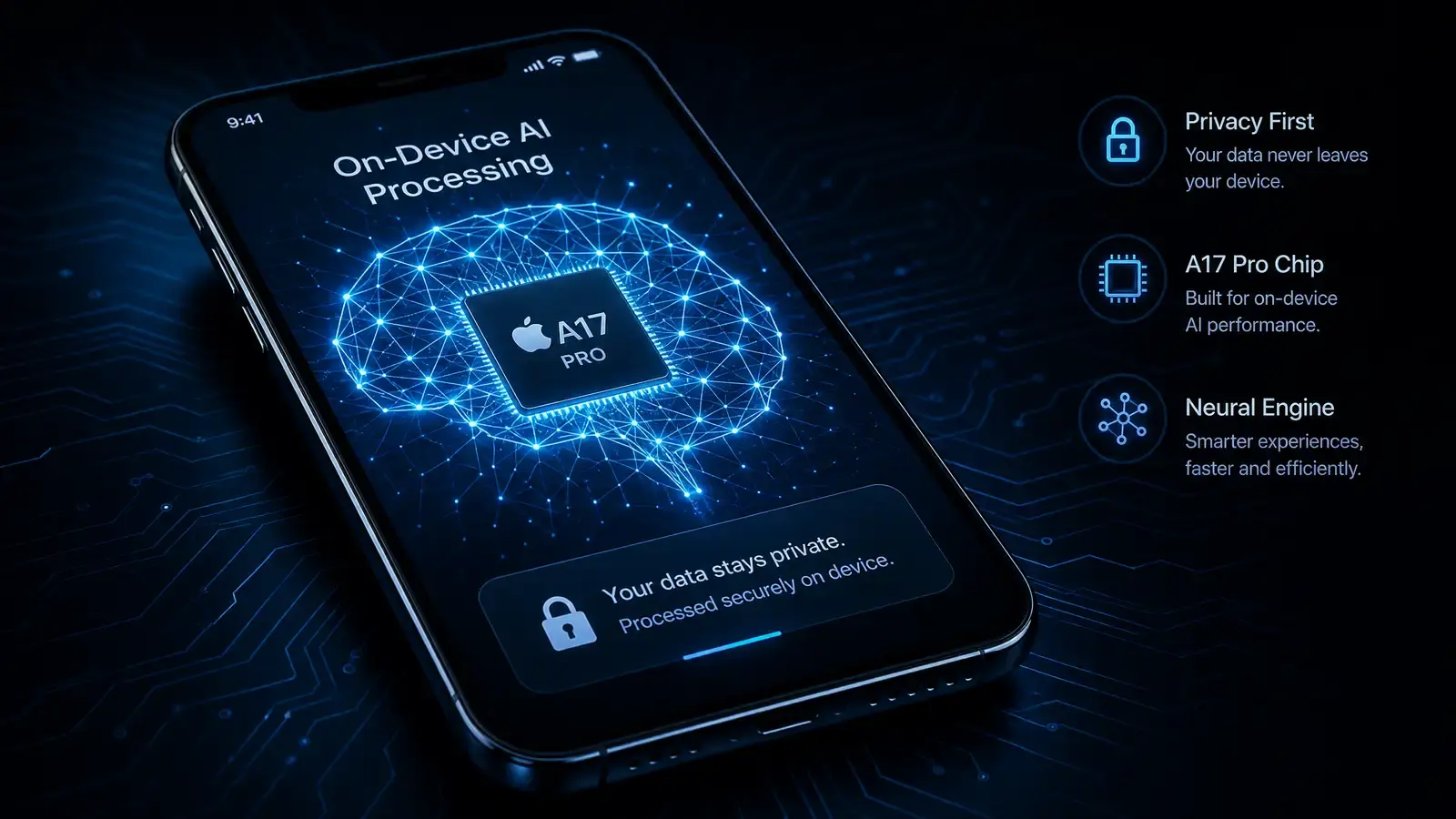
Apple’s WWDC 2026 was not just another product keynote. It was a statement of philosophy about where AI should live — and that philosophy is fundamentally different from everything Google, Microsoft, and OpenAI are doing.
While the rest of the industry pushes AI deeper into the cloud, Apple is betting that the future of AI is on your device. And the technical, business, and privacy implications of that bet are enormous.
The Edge AI Thesis
Apple’s approach to AI at WWDC 2026 can be summarized in one sentence: run everything on-device that you can, and use the cloud only for what you must.
The new Siri runs on Apple Silicon, using Foundation Models small enough to fit within the memory of an A17 Pro or M-series chip. Image Playground generates photorealistic images using the same on-device architecture, escalating to Apple’s Private Cloud Compute only for the most complex prompts. Text summarization, writing tools, and Siri’s new conversational abilities all start locally.
This is not just an engineering choice. It is a product philosophy that cascades through every layer of Apple’s ecosystem.
Why This Matters for the Industry
Privacy as a Competitive Moat
Apple’s on-device AI means your prompts, conversations, and generated images never leave your device unless they absolutely have to. Even when they do go to the cloud, Private Cloud Compute is designed so that Apple cannot see or retain your data.
Compare this to the dominant AI products:
- ChatGPT sends every prompt to OpenAI’s servers. Even with privacy modes enabled, the default is cloud processing.
- Google Gemini is deeply integrated with Google’s data infrastructure — the same infrastructure that powers targeted advertising.
- Microsoft Copilot runs on Azure, with all the data governance implications that come with enterprise cloud.
Apple is the only major AI provider that can credibly claim your data stays on your device. For enterprise customers, healthcare users, and privacy-conscious consumers, this is a genuine differentiator.
The Distribution Advantage
If Apple Intelligence works well enough on-device, Apple does not need to build massive data centers to serve billions of users. The computational cost is distributed across a billion devices that people already own.
This is a fundamentally different economic model from cloud AI, where every query costs the provider money in compute and energy. Apple’s marginal cost per user for on-device AI features is essentially zero after the initial development.
This matters because it changes the unit economics of AI. If Apple can deliver 80% of the value of cloud AI at near-zero marginal cost, the companies paying dollars per query are at a structural disadvantage.
The App Ecosystem Implications
WWDC 2026 introduced new APIs that let third-party apps integrate with Apple Intelligence. This means a note-taking app can use Apple’s on-device summarization, a photo editor can use Apple’s image generation, and a messaging app can use Apple’s writing tools — all without sending user data to external APIs.
For app developers, this removes a major friction point. Instead of choosing between building their own AI infrastructure (expensive) or sending user data to a third-party API (privacy risk), they can use Apple’s built-in capabilities.
This is the same dynamic that made Apple Pay dominant: when the platform provides a capability that is both convenient and private, third-party alternatives struggle to compete.
The Risks and Limitations
Apple’s edge AI thesis is compelling, but it has real constraints:
Model size limits. On-device models must fit within device memory, which means they are necessarily smaller and less capable than the largest cloud models. For complex reasoning, creative writing, and specialized knowledge, cloud models will remain superior.
Hardware fragmentation. Apple Intelligence requires A17 Pro or later. That excludes hundreds of millions of iPhones still in use. Android’s approach — cloud AI that works on any device with a browser — reaches a much larger audience.
The cloud fallback question. Apple’s Private Cloud Compute handles complex prompts that exceed on-device capacity. How well that cloud component works — and how Apple prices it over time — will significantly affect the overall user experience.
What This Means Going Forward
Apple’s bet on edge AI is not going to kill cloud AI. The two approaches will coexist, serving different needs. But Apple’s entry into AI with an edge-first model means:
- Privacy will become a table-stakes expectation. Users will increasingly expect AI features to work without sending their data to the cloud.
- Chip performance will matter more than ever. The quality of on-device AI is directly tied to the capabilities of the silicon running it. Apple’s custom chips are a competitive advantage that extends beyond traditional benchmarks.
- The AI divide will become a hardware divide. People with newer devices will have significantly better AI experiences than those with older ones. This is already true for Apple Intelligence, and it will become true for AI features across the industry as on-device processing becomes standard.
The companies that succeed in AI will be the ones that can balance capability with cost, privacy with convenience, and cloud power with edge efficiency. Apple has drawn a clear line in the sand. The question is whether the rest of the industry follows.
Sources: TechCrunch — WWDC 2026 Everything Announced, Business Insider Africa — 8 Big Takeaways from WWDC 2026, PCMag — Apple WWDC 2026 iOS 27 Siri AI
Related: Apple Unveils Siri AI at WWDC 2026, WWDC 2026: Siri AI Powered by Google Gemini
Reader Dispatches
No reader responses yet. Share your technical perspective below.
Related Posts
AI Agent Security Is Worse Than You Think: Inside the 15% Credential Leak Crisis
Capsule Security found that 15% of AI agent skill files contain hardcoded credentials with database write access. Combined with OWASP's Agentic AI Top 10, this analysis maps the real security risks enterprises face when deploying autonomous agents in 2026.
AI Has Replaced ESG as the Defining Business Narrative of 2026
As ESG reports are shelved and sustainability teams shrink, while robotics and physical AI raised $16.3 billion in a single quarter, a quiet reallocation of capital and attention is rewriting the rules of business.
Apple Unveils Siri AI at WWDC 2026: A Complete Overhaul Powered by Apple Intelligence
Apple introduced an entirely new Siri AI at WWDC 2026, featuring natural conversational responses, deeper system integration, and a rebuilt Apple Intelligence stack. Here is everything we know.