OpenAI Acquires NextSlide to Bring Presentation Tools Into ChatGPT
OpenAI has acquired NextSlide, a startup that converts notes and research into polished presentations. The team joins ChatGPT to build AI-powered productivity features.
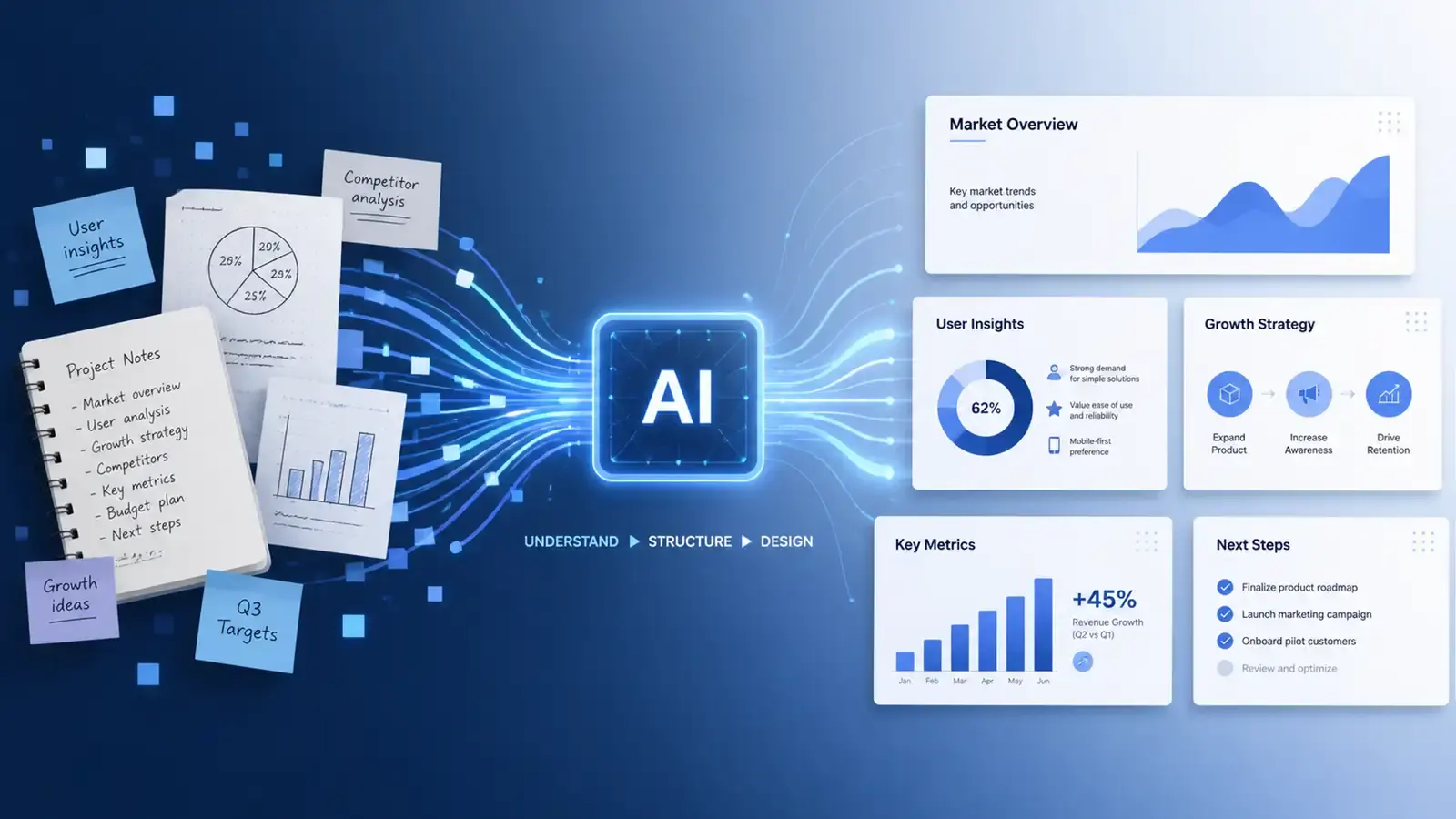
OpenAI has acquired NextSlide, a startup that built tools for turning notes and research into polished presentations. The deal, announced on August 8, brings the entire NextSlide team to OpenAI, where they’ll be working on ChatGPT.
NextSlide’s core product was a presentation builder that took raw input, whether meeting notes, research documents, or scattered ideas, and generated structured slide decks with layouts, formatting, and visual hierarchy. The tool differentiated itself by focusing on the research-to-presentation pipeline rather than just template-based slide creation.
What OpenAI gets
The acquisition gives OpenAI a team with deep expertise in document generation and structured content creation. While ChatGPT can already produce text that could be pasted into slides, the actual creation of polished presentations requires understanding layout, visual design, and the specific constraints of presentation software.
NextSlide’s technology likely addresses the gap between AI-generated text and finished visual content. That’s a problem every knowledge worker recognizes: you ask an AI to write a presentation, get back a wall of text, and then spend an hour formatting it into something presentable.
The integration path seems clear. NextSlide’s presentation capabilities could appear as a native ChatGPT feature, allowing users to generate complete slide decks from prompts or uploaded documents. This would compete directly with tools like Gamma, Tome, and Microsoft’s Copilot in PowerPoint.
The acquisition also suggests OpenAI is thinking beyond text generation. Presentations are inherently visual documents that require spatial reasoning, design principles, and an understanding of how information communicates through images and layouts rather than just words. NextSlide’s team brings that visual intelligence to a company that has primarily focused on language.
The productivity play
This acquisition fits a broader pattern in OpenAI’s strategy. The company has been steadily expanding ChatGPT from a chat interface into a productivity platform. Previous moves include file analysis, code execution, image generation, and deep research capabilities. Adding presentation creation continues that trajectory.
The productivity angle matters because it’s where the money is. Consumer chatbot usage drives brand recognition, but enterprise productivity tools drive revenue. Companies will pay for AI that saves their employees time on document creation, and presentations are one of the most time-consuming document types to produce well.
NextSlide’s team understood this workflow. Their product wasn’t about making AI-generated text look pretty. It was about understanding what makes a presentation effective: clear hierarchy, appropriate density, visual pacing, and the relationship between speaker notes and slide content. That domain knowledge is hard to build from scratch.
The timing also matters. As AI models become more capable, the bottleneck shifts from text generation to document production. Users increasingly expect AI to deliver finished products, not just drafts. Presentation creation represents one of the clearest opportunities to demonstrate that shift.
Competitive landscape
The presentation AI space has been heating up. Gamma launched in 2023 and quickly gained traction with its AI-first approach to slide creation. Tome pivoted from a presentation tool to a broader AI storytelling platform. Microsoft has been integrating Copilot into PowerPoint with mixed results.
OpenAI’s entry changes the competitive dynamics. ChatGPT’s massive user base means that a built-in presentation feature would reach more people than any standalone startup could. The question is whether OpenAI can match the polish and specialized features that dedicated tools have developed over years.
There’s also the question of integration depth. NextSlide’s standalone product could optimize every aspect of the presentation experience. As a feature inside ChatGPT, it would need to work within OpenAI’s interface constraints and balance presentation quality against the speed and simplicity users expect from a chat-based tool.
The acquisition could also pressure competitors to accelerate their AI features. Microsoft, which has both a chatbot in Copilot and a presentation tool in PowerPoint, now faces a scenario where its chatbot competitor is building integrated presentation capabilities. That competitive pressure could drive faster innovation across the entire space.
What this means for users
For ChatGPT users, the acquisition signals that document creation capabilities are expanding beyond text. The ability to generate complete presentations from a chat prompt would be a significant workflow improvement for anyone who regularly creates slide decks.
For the broader AI productivity space, it’s a reminder that the most valuable AI applications aren’t chat interfaces themselves, but the specific workflows they enable. OpenAI is betting that controlling the creation pipeline from research to finished document is more valuable than just providing the research step.
The NextSlide team’s experience with presentation-specific challenges like layout optimization, visual hierarchy, and content density will be valuable as OpenAI builds these capabilities. Whether they appear as a standalone product or as a ChatGPT feature, the acquisition points toward a future where AI handles the entire document creation process, not just the text generation step.
There’s also an implication for how we think about AI tools. The most successful AI applications won’t be the ones that generate the most text, but the ones that deliver the most complete solutions. Presentation creation is a perfect example: users don’t want AI-generated bullet points, they want finished slides they can present immediately.
The acquisition also raises questions about the future of standalone presentation tools. If OpenAI successfully integrates NextSlide’s capabilities into ChatGPT, tools like Gamma and Tome will need to differentiate themselves on something other than basic AI slide generation. That could push the entire industry toward more specialized, higher-quality solutions that serve specific use cases rather than trying to be everything to everyone.
For individual users, the practical impact will depend on how OpenAI implements the integration. A seamless experience where users describe what they want and get a polished presentation would be genuinely transformative. A clunky implementation that still requires significant manual editing would be less impressive but still useful. The NextSlide team’s expertise suggests OpenAI is aiming for the former, but execution will determine the outcome.
The broader trend
This acquisition is part of a larger pattern in the AI industry. Companies are moving beyond chat interfaces toward integrated productivity suites. Google has been building similar capabilities into Workspace, and Microsoft has been embedding Copilot across its Office applications. OpenAI’s move with NextSlide follows the same logic: the future of AI isn’t just conversation, it’s creation.
The presentation space is particularly interesting because it combines multiple AI capabilities. You need natural language understanding to interpret prompts, visual design knowledge to create layouts, and domain expertise to ensure the content communicates effectively. NextSlide’s team brings all three, which is why their acquisition is more significant than it might appear at first glance.
For the AI industry broadly, this acquisition signals that the next phase of competition will be about end-to-end solutions rather than individual capabilities. Users don’t want to stitch together multiple AI tools to create a single document. They want one system that handles the entire workflow from concept to finished product. OpenAI is positioning itself to be that system for presentations, and likely for other document types as well.
The implications extend beyond just presentations. If OpenAI can successfully integrate NextSlide’s visual document creation capabilities, the same approach could apply to reports, proposals, infographics, and other visual content formats. That would represent a significant expansion of ChatGPT’s utility and a new competitive frontier in the AI productivity space.
What makes this acquisition particularly noteworthy is the timing. We’re at a moment when AI capabilities are advancing rapidly, but user expectations are advancing even faster. People who use ChatGPT for text generation now expect it to handle entire workflows. The gap between what AI can do and what users expect is closing, and companies like OpenAI are racing to close it before competitors do. NextSlide gives them a significant head start in the presentation space, and potentially in visual document creation more broadly.
What competitors should learn
The NextSlide acquisition offers lessons for other AI companies. First, domain expertise matters. NextSlide’s understanding of presentation design principles and workflow is more valuable than raw AI capability. Second, integration is key. Standalone tools face an uphill battle against platforms that can embed similar features directly into existing workflows. Third, timing matters. NextSlide built its expertise before the acquisition, making it a valuable target rather than a commodity.
For startups in the AI productivity space, the message is clear: build deep expertise in specific workflows, or risk being acquired or displaced by platforms that can integrate similar capabilities. The era of simple AI wrappers is ending, and the era of integrated AI solutions is beginning.
The acquisition also highlights the importance of understanding user needs beyond just AI capability. NextSlide didn’t just build AI that could generate slides. They built AI that understood what makes presentations effective. That’s a subtle but crucial difference, and it’s why their team was valuable enough for OpenAI to acquire rather than just build competing technology.
As we look ahead, the presentation AI space will likely consolidate around a few major players. OpenAI with NextSlide, Microsoft with Copilot in PowerPoint, and Google with Gemini in Workspace will probably dominate. Independent tools like Gamma and Tome will need to find niches or face increasing pressure. The acquisition marks a turning point in how AI-powered presentation tools will evolve, and users will ultimately benefit from the increased competition and innovation that follows.
Reader Dispatches
No reader responses yet. Share your technical perspective below.
Related Posts
OpenAI Starts Rolling Out GPT-6 Astra, With the Cyber Brakes On
GPT-6 Astra is going out in phases after hitting OpenAI's Critical cyber threshold. Daybreak customers go first. Free ChatGPT does not.
A Flaw in OpenAI, Anthropic, and Google APIs Lets Weaker Models Steal Stronger Ones' Reasoning
Researchers discovered that cheaper AI models can extract hidden reasoning traces from frontier models through API manipulation, exposing PII and credentials in the process.
Claude Opus 5 vs GPT-5.6: Which AI Model Should You Actually Use?
Two frontier AI models launched within two weeks of each other in July 2026. Here's how they actually compare on benchmarks, pricing, and real-world use cases.