The Lobster Molts: Why Anthropic Crushed 'Clawdbot' and the Dangerous Game of Building on APIs
The viral AI agent Clawdbot has been forced to rebrand to Moltbot after a trademark dispute with Anthropic. Beyond the name change lies a deeper story about platform risk, the 'vibe coding' craze, and why open-source developers are walking a legal tightrope.
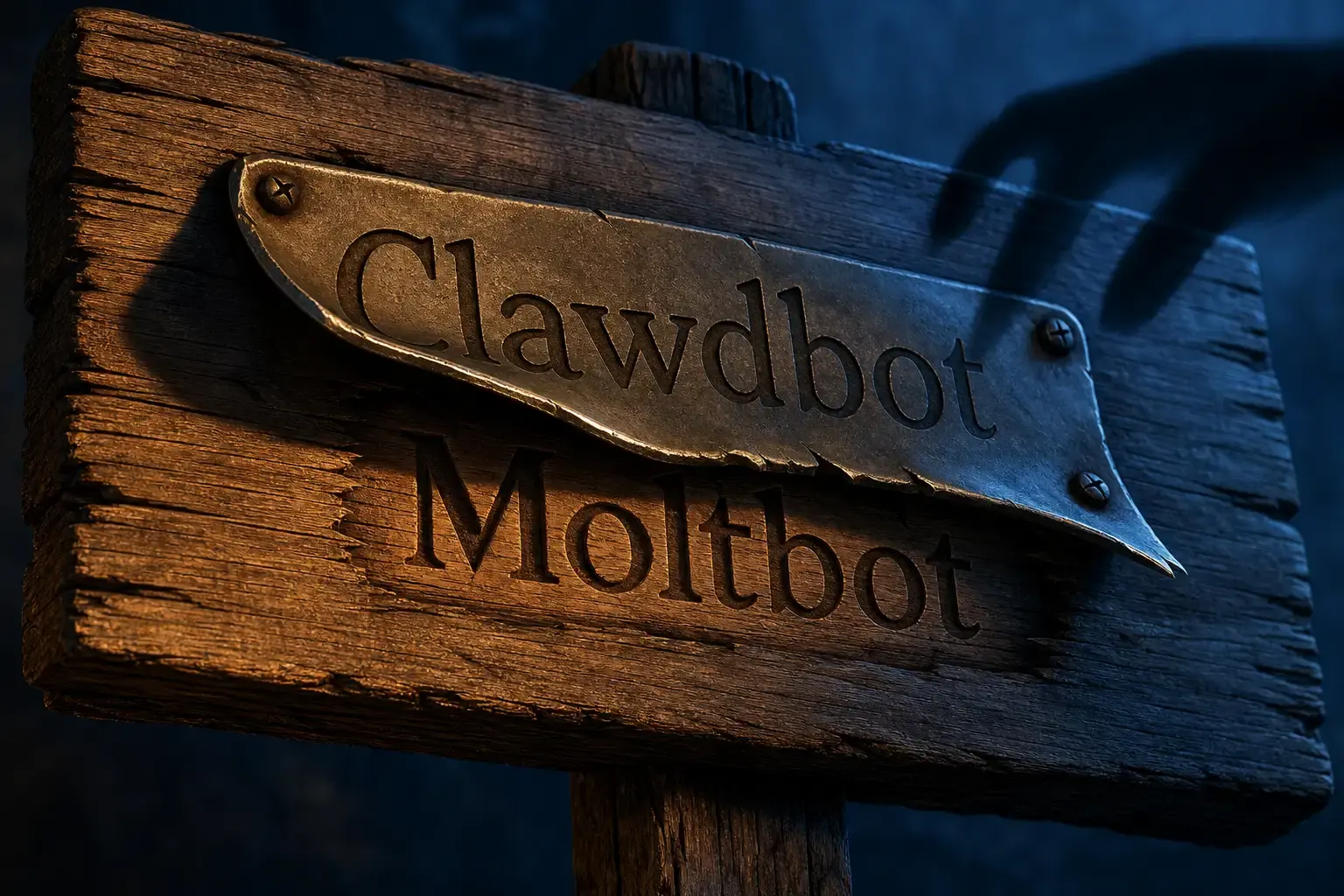
If you’ve been scrolling through Tech Twitter (or X) recently, you’ve seen the lobster.
A robotic lobster named Clawdbot. It became the poster child for the new wave of “agentic AI”: autonomous scripts that don’t just chat with you but actually do things, like refactoring your codebase, booking dinner reservations, or managing your calendar. It got so popular that it contributed to a spike in Mac Mini sales, as developers scrambled to set up dedicated “agent servers.”
But as of this week, the lobster has been cooked. Or rather, forced to molt.
In a move that surprises no one familiar with corporate trademark law (but angered plenty of crypto bros and open-source idealists), Anthropic, the $40 billion parent company of the Claude LLM, issued a polite but firm tap on the shoulder to Clawdbot’s creator, Peter Steinberger.
The result? Clawdbot is dead. Long live Moltbot.
This isn’t just a story about a name change. It’s about the precarious nature of building in the “wrapper economy,” the toxicity of meme-coin speculation in tech, and the technical reality of what these agents actually do.
The Cease and Desist: Why “Clawbot” Wasn’t Enough
The dispute centers on the phonetic and visual similarities. “Clawd” sounds exactly like “Claude.” The logo was a lobster (claws -> Claude). For Anthropic, protecting their trademark is standard operating procedure. If they don’t defend it against a popular open-source tool, they risk losing the ability to defend it against a malicious scammer later.
Steinberger, the creator, took to X to explain the situation. He noted that Anthropic contacted him directly.
“Anthropic asked us to rename,” the official Moltbot account posted. “‘Molt’ fits well—it’s what lobsters do when they grow.”
The negotiation, or lack thereof, regarding the alternatives is telling. You might think simply dropping the “d” to make it “Clawbot” would suffice. It keeps the lobster theme but removes the direct phonetic link to Claude.
Anthropic said no.
“Not allowed to,” Steinberger confirmed. This suggests Anthropic’s legal team is taking a wide perimeter around their IP. They aren’t just protecting the name “Claude”; they are protecting the concept of a helpful AI assistant associated with that specific phoneme structure in the AI space.
The Legal Reality Check
For developers, this is a lesson worth learning. When you build an open-source tool that relies 100% on a specific provider’s API (in this case, Anthropic’s), you are already in a vulnerable position. Branding your tool to sound like the provider is poking the bear.
| Feature | Clawdbot (Old) | Moltbot (New) | Anthropic’s Stance |
|---|---|---|---|
| Name | Clawdbot | Moltbot | ”Clawd” is too close to “Claude”. |
| Mascot | Lobster (Clawdy) | Lobster (Molty) | Lobster theme is tolerated, but name must change. |
| Function | AI Agent Wrapper | AI Agent Wrapper | Allowed (via API usage). |
| Logo | ”C” shaped claw | New abstract claw | Old logo infringed on trademark style. |
Under the Hood: What is Moltbot, Really?
Beyond the legal drama, why do people care about this tool? Why are people buying Mac Minis to run it?
Moltbot (formerly Clawdbot) represents the shift from Chat AI to Agentic AI. It’s a command-line interface (CLI) tool designed to run autonomously. Unlike ChatGPT, where you type a prompt and wait for text, Moltbot is designed to execute complex workflows.
It leverages the Claude 3.5 Sonnet API, which is currently regarded by developers as the best model for coding tasks due to its large context window and reasoning capabilities.
How It Works (The Technical Breakdown)
While the branding has changed, the code remains a sophisticated wrapper around the Anthropic API, using a loop structure to allow the AI to “think” and then “act.”
If you were to build a simplified version of what Moltbot does, the logic looks something like this in Python. It’s not just a single API call; it’s a ReAct (Reasoning + Acting) loop.
# Conceptual architecture of an agent like Moltbot
import anthropic
import subprocess

client = anthropic.Anthropic(api_key="your-key-here")

def execute_system_command(command):
    """The dangerous part: letting AI run shell commands."""
    print(f"🦞 Molty is executing: {command}")
    result = subprocess.run(command, shell=True, capture_output=True, text=True)
    return result.stdout

def agent_loop(user_goal):
    history = [{"role": "user", "content": user_goal}]

    while True:
        # 1. Ask Claude what to do next
        response = client.messages.create(
            model="claude-3-5-sonnet-20240620",
            max_tokens=1024,
            messages=history,
            system="You are an autonomous agent. You can output <bash>command</bash> to run code."
        )

        content = response.content[0].text
        print(f"🤖 Thought: {content}")

        # 2. Check if the agent wants to run a command
        if "<bash>" in content:
            cmd = content.split("<bash>")[1].split("</bash>")[0]
            output = execute_system_command(cmd)

            # 3. Feed the output back to Claude
            history.append({"role": "assistant", "content": content})
            history.append({"role": "user", "content": f"Command Output: {output}"})
        else:
            # Task likely complete
            break

# Example usage: "Vibe Coding"
# agent_loop("Check my git status, run the tests, and if they fail, fix the error in main.py")
The “Vibe Coding” Phenomenon
The term “Vibe Coding” has been thrown around alongside Moltbot. It refers to a style of programming where the human provides the “vibe” (high-level intent, architectural decisions, aesthetic preferences) and the AI handles the implementation details.
Moltbot excels here because it runs locally. It can access your file system directly.
Why the Mac Mini? You might wonder, “Why buy hardware for this?”
- Always-on Availability: An agent that manages your calendar or monitors your email needs to run 24/7.
- Environment Stability: Running complex agents on your main development laptop can be messy (conflicting Python versions, background processes eating RAM).
- The “Server” Aesthetic: There is an undeniable “cool factor” in having a dedicated headless machine that serves as your digital brain extension.
The Crypto Toxicity: When Memecoins Ruin Everything
The most depressing part of this saga isn’t the trademark law; it’s the reaction from the crypto community.
At some point, a “Clawd” memecoin was created on the Solana blockchain. It had zero official affiliation with Steinberger or the software project. Yet, when the rebranding was announced, the value of this token plummeted.
The result? Steinberger was bombarded with harassment.
“You are actively hurting the project,” Steinberger wrote to the crypto traders.
He even reported that his personal GitHub account was briefly compromised by “crypto scammers,” though the Moltbot repository remained safe.
This highlights a growing, toxic trend in open source: Financialization by Proxy. Developers release cool tools for free. Speculators launch a token using the tool’s name. When the developer makes a technical or legal decision (like renaming), the speculators lose money and attack the developer. It’s a perverse incentive structure that discourages builders from engaging with the public.
Warning to Open Source Devs: ⚠️ If your project goes viral, monitor the crypto space. You might be the unwitting “CEO” of a memecoin you never asked for.
The “Platform Risk” is Real
The Moltbot incident is a microcosm of the broader AI ecosystem right now. We are seeing a massive consolidation of power around the model providers (OpenAI, Anthropic, Google).
If you are building:
- Wrappers: Thin interfaces over APIs.
- Agents: Tools that rely heavily on a specific model’s reasoning.
- Plugins: Extensions for specific ecosystems.
You serve at the pleasure of the King.
OpenAI did this recently with iyO (an AI hardware startup) forcing them to scrub mentions of Jony Ive’s “LoveFrom” connection, and they forced a rename of a feature in the Cameo app.
The Lesson: Build your brand identity away from the model you use.
- Bad: “GPT-Writer”, “Claude-Coder”, “Gemini-Helper”
- Good: “Jasper”, “Cursor”, “Moltbot” (after the rename)
How to Install Moltbot (The Right Way)
If you want to try out the agent formerly known as Clawdbot, here is how you get started with these types of CLI agents. (Note: Always check the official repo for the latest specific commands, as they change rapidly).
Prerequisites:
- Node.js or Python (depending on the specific build version)
- An Anthropic API Key (Credit card required)
# 1. Clone the repository (using the new name)
git clone https://github.com/moltbot/moltbot.git

# 2. Navigate into the directory
cd moltbot

# 3. Install dependencies
# (Assuming it's a Node/TypeScript based agent, which many are)
npm install

# 4. Set up your environment variables
# You typically need to rename .env.example to .env
cp .env.example .env

# 5. Edit the .env file to add your key
# ANTHROPIC_API_KEY=sk-ant-api03-...
Running the Agent:
# Start the interactive session
npm start

# > Moltbot: How can I help you today?
# > You: Scan my current directory and explain what this project does.
⚠️ Security Warning:
Giving an AI agent access to your terminal (exec permissions) is risky.
- Do not run this in your root directory.
- Do not give it sudo access unless you know exactly what you’re doing.
- Always run in a sandboxed environment or a container (Docker) if possible.
Conclusion: The Lobster Grows
Steinberger’s quote about the rename was poignant: “Molt fits well—it’s what lobsters do when they grow.”
The rebranding might be a blessing in disguise. “Clawdbot” sounded like a feature; “Moltbot” sounds like a product. By shedding the derivative branding, the project is forced to stand on its own merits: its code, its utility, and its community, rather than just riding the coattails of Anthropic’s marketing.
For the rest of us, it’s a reminder that in the Gold Rush of AI, the shovel sellers (Anthropic, OpenAI) own the land. If you’re going to dig, make sure you don’t wear a hat that looks exactly like the landlord’s.
References:
Reader Dispatches
No reader responses yet. Share your technical perspective below.
Related Posts
Qwen3-Max-Thinking Explained: Adaptive Tool Use, Experience-Based Test-Time Scaling and API Access
Alibaba's Qwen3-Max-Thinking explained: built-in Search, Memory and Code Interpreter, the experience-cumulative test-time scaling behind its 58.3 HLE (with tools) score, OpenAI- and Anthropic-compatible API access, and trade-offs.
The Polite Executioner: Why Anthropic is the Only AI Lab Seriously Planning to Replace You
While OpenAI and Google talk 'augmentation,' Anthropic is building tools to replace white-collar workers. A deep dive into Dario Amodei's paradox of warning about unemployment while engineering the solution.
Qwen3-TTS: Alibaba's 12Hz Gamble to Redefine Open Source Speech Synthesis
Alibaba's Qwen team just dropped Qwen3-TTS, featuring a radical 12Hz tokenizer and a 'Dual-Track' architecture. Is this the open-source ElevenLabs killer we've been waiting for? We analyze the tech, the code, and the reality.