OpenClaw Latest News in March 2026: Backups, Security Fixes, and Fake Installer Risks
OpenClaw's latest March 2026 updates include new backup commands, a major SecretRef security fix, and warnings around a fake npm installer that raises supply chain concerns.
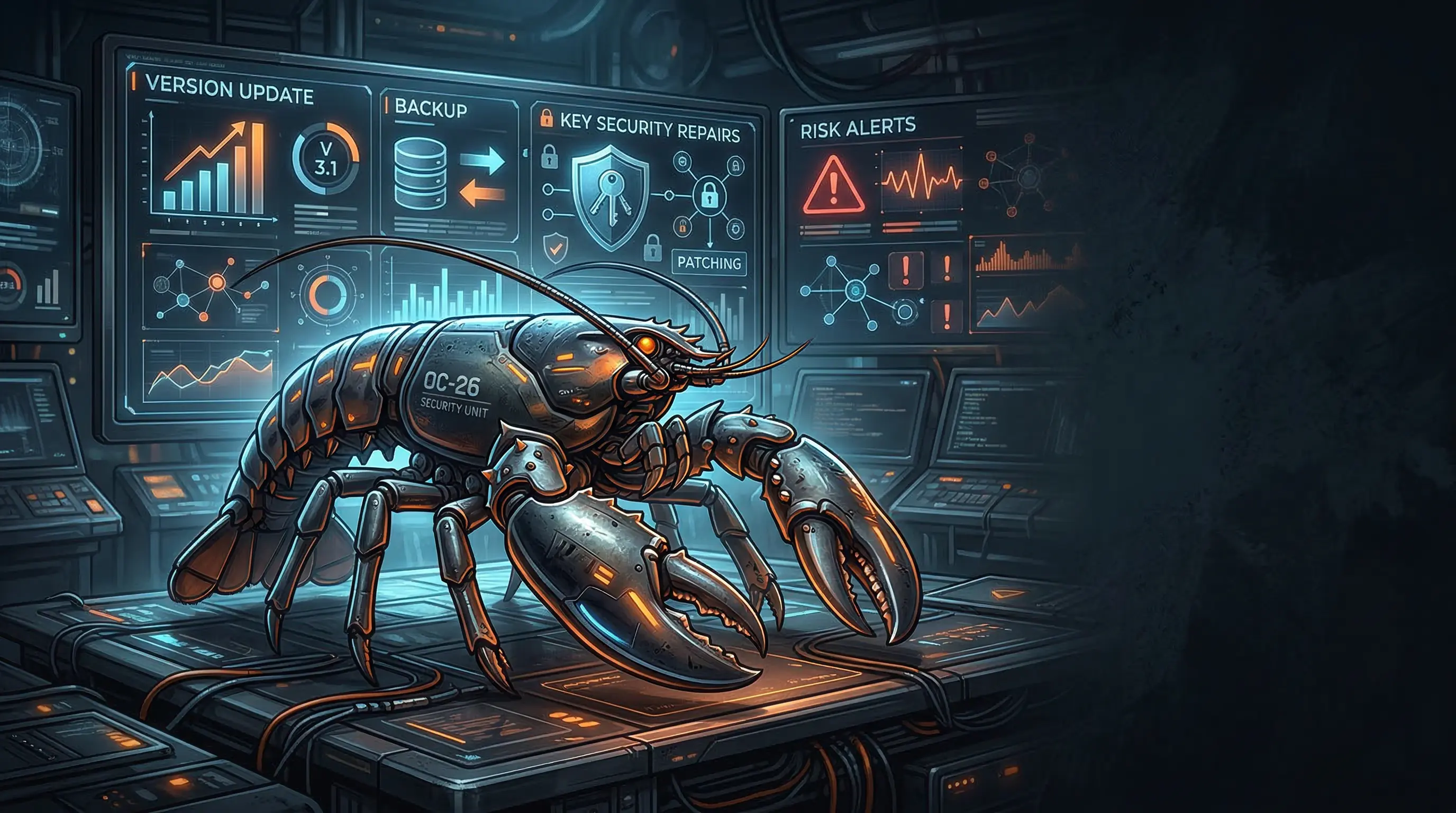
If you have been following OpenClaw this week, the shift is hard to miss. The project is no longer just another fast-rising AI agent repo with a huge GitHub graph behind it. In early March 2026, OpenClaw moved into a more serious phase: rapid releases, visible security work, and the first clear signs that attackers are starting to exploit its momentum.
As of March 10, 2026, the openclaw/openclaw repository has roughly 296,834 GitHub stars, and its latest stable release is v2026.3.8, published on March 9. That number matters, but the real story is elsewhere. The most important OpenClaw news right now is not one flashy feature. It is the fact that the project is starting to look like something people want to run for the long haul, which also means backup, config hygiene, and installation safety suddenly matter a lot more.
What happened in OpenClaw this month
March 9: v2026.3.8 adds backup commands
The most practical change in v2026.3.8 is the addition of openclaw backup create and openclaw backup verify. Those commands are not especially glamorous, but they are the kind of thing a project needs once users start depending on local state, agent workspaces, and longer-lived sessions.
This release also shipped several quality-of-life updates, including a remote gateway token field for macOS remote mode, a configurable talk.silenceTimeoutMs, and Brave web search support in llm-context mode. Put together, that makes 3.8 feel less like a cosmetic patch and more like a release focused on making OpenClaw easier to operate day to day.
March 8: v2026.3.7 turns context handling into a plugin surface
If you care more about architecture than end-user commands, v2026.3.7 may be the more important release. It introduced a ContextEngine plugin interface that lets developers customize how context is assembled, compacted, and handed across subagents.
That matters because context is where agent systems either become useful or fall apart. Memory, session continuity, and context compaction are not side features in an agent product. They are the product. By pulling that logic into a real extension surface, OpenClaw is starting to behave more like a platform and less like a growing bundle of hardcoded workflows.
March 3: v2026.3.2 expands the operational foundation
A few days earlier, v2026.3.2 already hinted at the same direction. That release added first-class PDF analysis, expanded SecretRef support across 64 credential targets, and introduced openclaw config validate. It also changed new-install defaults so tools.profile now starts at messaging instead of giving broad coding and system access from the outset.
That combination says a lot about where the project is going. The team is still shipping new capabilities, but it is also spending more energy on the boring but necessary parts: validation, secret handling, permission boundaries, and recoverability.
The biggest March story is the security fix
The most important OpenClaw development this week is not a feature release. It is the SecretRef-related models.json issue that surfaced on GitHub and was then patched quickly.
On March 4, GitHub issue #34335 reported that when users managed API keys through exec-source SecretRefs in auth-profiles.json, OpenClaw could end up writing resolved plaintext keys into agents/*/agent/models.json. That is not an abstract concern. It is a direct credentials-at-rest problem. The report also noted that the file could be regenerated during gateway restarts, which made stale secrets harder to eliminate cleanly.
On March 7, maintainers merged PR #38955 to address the issue. The fix path was clear and substantial:
- SecretRef-managed auth values are now persisted as markers instead of plaintext secrets
secrets auditandsecrets applywere expanded to inspectmodels.jsonresidues forapiKeyvalues and sensitive headersmodels.jsonwrites were hardened with deterministic serialization and0600file mode enforcement- merge behavior was updated so SecretRef-managed providers no longer preserve stale plaintext values by default
If you have been running OpenClaw on a laptop, workstation, or VPS with multiple model providers, this is the part of the changelog worth taking personally. Updating is only the first step. It also makes sense to inspect older workspace state and confirm that no legacy models.json file still contains secrets that should not be there.
Fake installers are now part of the story too
Another development that should not be overlooked: on March 8, JFrog Security Research published a report about a malicious npm package, @openclaw-ai/openclawai, that impersonated an OpenClaw installer.
According to JFrog, the package presented itself as a harmless CLI installer while deploying a much more aggressive payload chain. The report describes theft of system credentials, browser data, crypto wallets, SSH keys, Apple Keychain data, and other sensitive material, followed by persistent remote access behavior.
This is ugly, but it is also predictable. OpenClaw is exactly the kind of project attackers like to piggyback on: fast-growing, widely discussed, permission-heavy, and attractive to technical users who are willing to install command-line tooling quickly. The official documentation positions OpenClaw as a personal AI assistant that can work across messaging channels, files, browsers, and nodes. That power is part of the appeal, and also part of the attack surface.
So if you are trying OpenClaw for the first time, installation source is now a real security boundary. Use the official docs and verified distribution paths. Do not blindly trust a package just because it looks like an “OpenClaw installer” in search results.
What this means for current users
For existing users, the last week of OpenClaw news points to a simple conclusion: the project is maturing, and the operational burden is maturing with it.
1. Upgrade for security before you chase features
The new context engine interface in 3.7 and the backup commands in 3.8 are useful. But if you are running a persistent instance, the SecretRef-related fixes matter more than experimenting with the newest surface features.
2. Start treating backup and validation as routine
Now that OpenClaw has native backup creation and verification commands, there is less excuse to rely on ad hoc folder copies and hope for the best. Once local state becomes valuable, backup stops being optional maintenance and becomes part of basic safety.
3. Treat installation paths the way you treat credentials
The fake installer campaign is a reminder that popularity cuts both ways. A hot repo attracts users, contributors, clones, tutorials, and malicious packaging. Going forward, every install, upgrade, and plugin decision deserves more scrutiny than it did a few months ago.
Why this OpenClaw update deserves its own article
Taken together, this week’s OpenClaw developments show a project crossing an important line. It is still riding hype, but it is also beginning to build the less exciting machinery that determines whether a tool can survive real usage: context control, validation, backup, secrets hygiene, and safer operating defaults.
That is why I would not describe OpenClaw as just another repo that “blew up” this month. It looks more like a fast-moving open-source agent platform entering its second phase. The stars are still part of the story, but they are no longer the whole story. The more revealing details are buried in release notes, issue threads, and security reports.
If you want more context, these two related pieces are a good follow-up:
Sources
Reader Dispatches
No reader responses yet. Share your technical perspective below.
Related Posts
OpenClaw Latest News as of March 16, 2026: Rapid Releases, a Recovery Build, and Two Fresh Security PRs
As of March 16, 2026, OpenClaw has shipped v2026.3.11, v2026.3.12, and v2026.3.13-1 within seven days, while a Telegram SecretRef update issue and two new security PRs reveal where the platform is still tightening up.
OpenClaw (Lobster) Takes AI World by Storm: Lei Jun Joins In, Thousands Queue at Tencent HQ
GitHub's most popular project OpenClaw sparks global frenzy, thousands queue at Tencent headquarters in Shenzhen, Xiaomi launches Xiaomi miclaw, but China's MIIT issues security warning
Claude Code Source Leak: Anthropic Didn’t Lose Customer Data, But It Did Expose Its Engineering Blueprint
On March 31, 2026, Anthropic accidentally shipped internal Claude Code source material in a public package update. The company says no customer data or credentials were exposed, but the incident still revealed Claude Code’s architecture, roadmap clues, and product tradeoffs.