Anthropic and the Pentagon Negotiate Usage Limits on Claude in a $200M Contract
How Anthropic and the U.S. Department of Defense disagreed over usage terms for Claude, including autonomous weapons and domestic surveillance, ahead of a contract deadline, and what happened next.
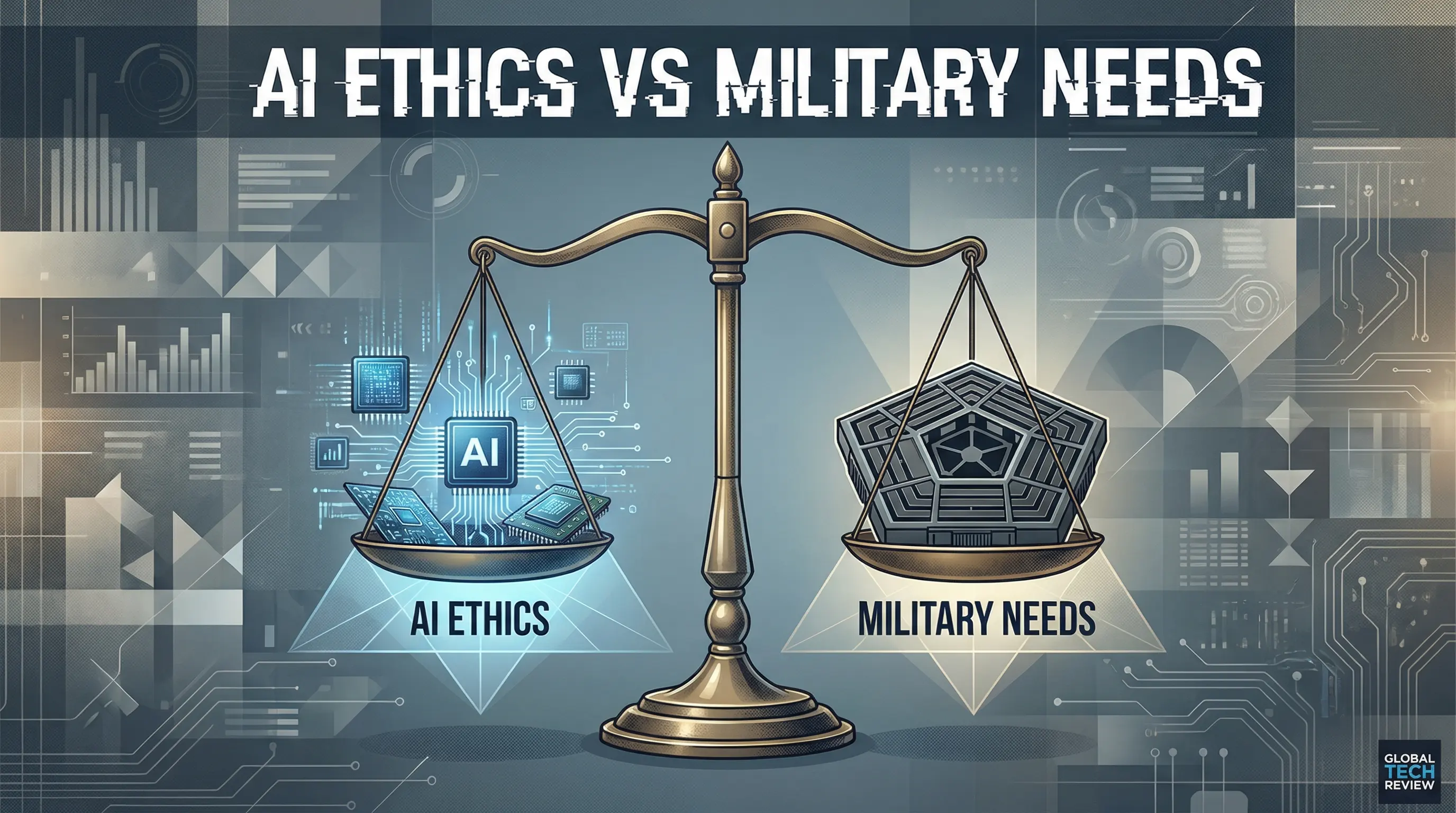
Anthropic and the Pentagon Negotiate Usage Limits on Claude
Anthropic refuses to let the Pentagon use its Claude AI system without restrictions. The AI safety company insists on blocking autonomous weapons and mass surveillance, but the Pentagon threatens to cancel a $200 million contract. Friday is the deadline.
Core Dispute: “Any Lawful Use” Clause
The Pentagon demands all AI suppliers agree to “any lawful use” terms. This clause would allow the military unrestricted use of AI systems, including mass surveillance and lethal autonomous weapons systems.
Defense Secretary Pete Hegseth stated in a January memo that the Defense Department will become an “AI-first” warfighting force, requiring contractors to eliminate company-specific constraints within 180 days. He said: “We must accept that the risks of not moving fast enough outweigh the risks of imperfect alignment.”
Anthropic CEO Dario Amodei maintains two red lines:
- Refusing fully autonomous military targeting systems
- Refusing AI-assisted mass surveillance of U.S. citizens
Amodei warned in his January essay “The Adolescence of Technology”: “A powerful AI looking across billions of conversations from millions of people could gauge public sentiment, detect pockets of disloyalty forming, and stamp them out before they grow.” He considers large-scale AI-assisted surveillance a “crime against humanity.”
Reported Use in a Military Operation
According to a Wall Street Journal investigation, Claude AI was deployed through Palantir during the January 2026 U.S. military operation to capture Venezuelan President Nicolás Maduro. Claude’s exact role has not been made public.
After news of the operation broke, Anthropic executives proactively contacted Palantir to inquire about Claude’s usage. A senior Pentagon official told Axios: “It was raised in such a way to imply that they might disapprove of their software being used, because obviously there was kinetic fire during that raid, people were shot.”
This phone call angered Defense Department leadership, triggering the current contract crisis.
The Pentagon’s Position
According to reports, the Pentagon set out several possible measures:
Friday Ultimatum Defense Secretary Hegseth gave Anthropic CEO Amodei a Friday 5:01 PM deadline, demanding the company “get on board or not.”
Supply Chain Risk Designation Threatens to classify Anthropic as a “supply chain risk,” typically reserved for foreign adversaries like Huawei. If implemented, this would require all defense contractors to remove Anthropic technology from their systems.
Defense Production Act Threatens to invoke the Defense Production Act to force Anthropic to provide military services regardless of company consent.
Pentagon CTO Emil Michael (former Uber executive) urges Anthropic to “cross the Rubicon,” making an irreversible commitment to support military operations.
Anthropic’s Negotiating Leverage
Claude is currently the only frontier AI model with Impact Level 6 security clearance, capable of operating on fully classified Pentagon networks. Deployed through Palantir’s AI platform and Amazon’s Top Secret Cloud, Claude sits at the center of workflows other models cannot access.
If Anthropic is blacklisted, every defense contractor seeking government work would need to certify removal of all Anthropic technology from their systems, creating single-supplier vulnerability for the Pentagon.
How Other AI Companies Have Approached Defense Work
In contrast to Anthropic, other major AI companies have renegotiated contracts:
- OpenAI: Agreed to “any lawful use” terms, ChatGPT joining GenAI.mil platform
- Google: Renegotiated contract, Gemini approved for unclassified military tasks
- xAI: Elon Musk’s Grok approved for classified environments
Pentagon officials confirm xAI is “on board with being in a classified setting,” while other companies are “close” to agreement.
Legal Expert Skepticism
Former Justice Department-Defense Department liaison Katie Sweeten questions the Pentagon’s approach: “I don’t know how you can both declare a company to be a supply chain risk and compel that same company to work with the military. It sounds like the supply chain risk may not be a legitimate claim, but more punitive.”
Potential Consequences
Impact on Anthropic Losing the $200 million Pentagon contract is financially manageable for the $61 billion-valued Anthropic, but supply chain risk designation would be catastrophic, potentially causing loss of all government business opportunities and scaring away regulated industry enterprise customers.
Impact on AI Industry This dispute exposes a reality: what happens when government demands AI companies abandon safety restrictions? Anthropic could become the first U.S. AI company blacklisted by government for maintaining ethical positions. Other companies have all compromised.
Technology vs Ethics Balance
Anthropic argues:
- AI technology isn’t reliable enough to operate lethal weapons systems
- Existing legal frameworks can’t keep pace with AI technology development
- Large-scale AI surveillance could violate basic U.S. citizen rights
The Pentagon emphasizes:
- AI advantage is crucial in competition with China and Russia
- Military commits all AI use will comply with existing law
- Private company policies cannot limit military operations
What to Watch
With Friday’s deadline approaching, Anthropic faces a difficult choice: maintain principles and risk government blacklisting while keeping moral high ground, or compromise to preserve business interests but potentially damage company values.
This standoff isn’t just business negotiation—it exposes conflict between AI-era moral principles and national security demands. Finding balance between national security, business interests, and ethical principles has become a major challenge society must address.
Friday’s deadline approaches as the world watches this unprecedented battle between AI ethics and military needs unfold.
Update and sources
This article reflects the negotiations as of mid-February 2026. On February 27, the administration directed federal agencies to stop using Anthropic’s products and the Pentagon moved to designate the company a supply-chain risk, while OpenAI announced its own agreement with the Defense Department (NPR, Reuters). Anthropic challenged the designations in court. A federal judge in San Francisco ruled one designation unlawful (AP), while on September 25 the D.C. Circuit upheld the other in a 2–1 decision (AP, court opinion). Anthropic has asked for a rehearing.
Reader Dispatches
No reader responses yet. Share your technical perspective below.
Related Posts
U.S. Government Halts Use of Anthropic as OpenAI Signs Pentagon AI Agreement
In February 2026, the U.S. government moved to stop using Anthropic's products after a dispute over usage restrictions, and OpenAI signed an agreement with the Defense Department. What happened and what it means for AI governance.
OpenAI's Agreement With the U.S. Defense Department: Terms, Usage Limits and the Debate Over Military AI
What OpenAI's 2026 agreement with the U.S. Department of Defense covers, the usage limits it says are in the contract, how it differs from Anthropic's dispute with the Pentagon, and the open questions about AI in defense.
AI News Roundup: The 5 Official Updates That Mattered Most in the Second Week of March 2026
As of March 15, 2026, the clearest AI trend is not just better models. This week's official updates from OpenAI, Google, Microsoft, NVIDIA, and Anthropic show the race shifting toward safety, multimodal retrieval, agent governance, and enterprise deployment.