MetaGPT: Stop Chatting with AI, Start Managing an AI Software Company
MetaGPT treats LLMs as a structured software company with PMs, Architects, and Engineers—not just chatbots with tools. Here's how to deploy your own digital workforce.
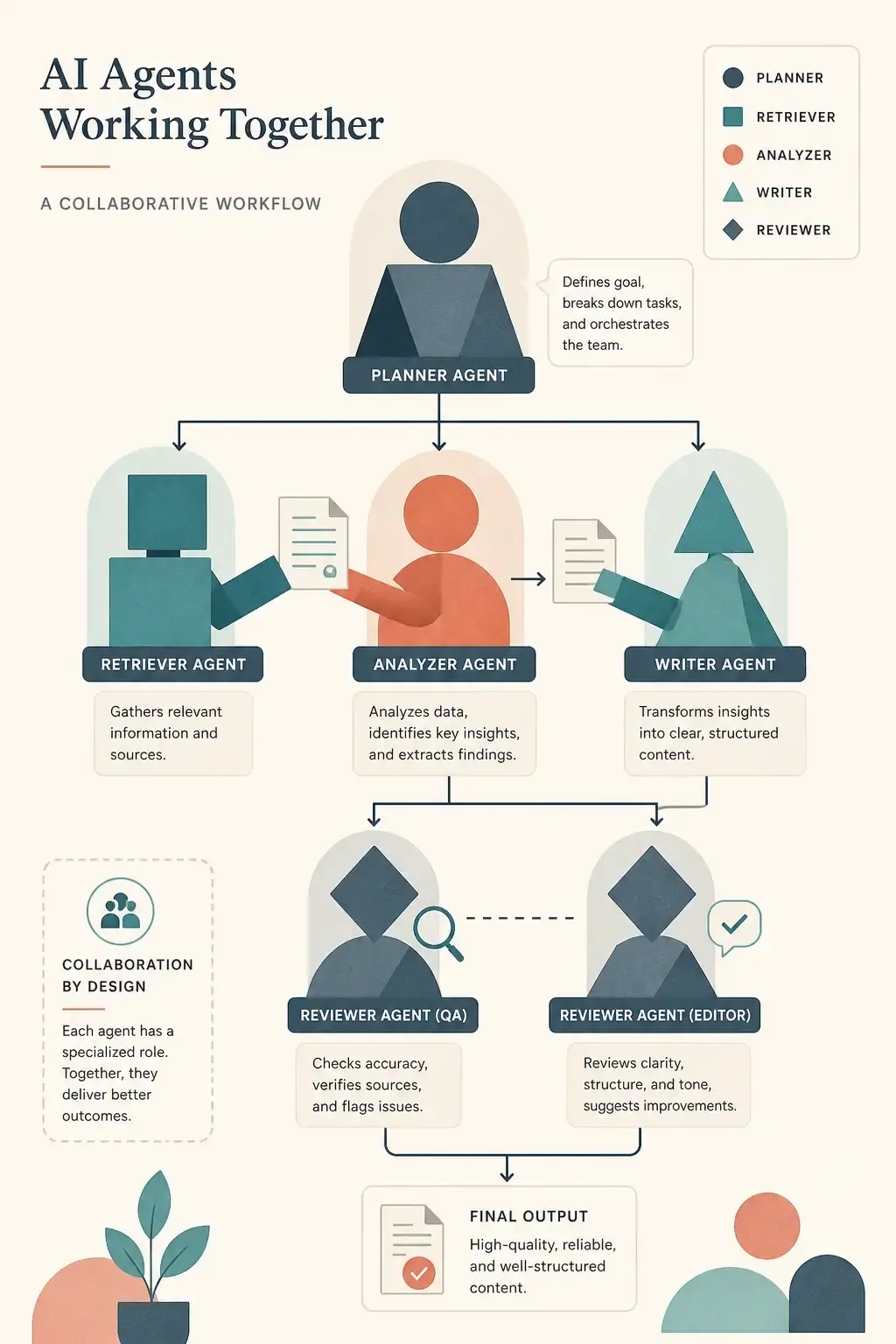
We have all been there: you ask ChatGPT to write a complex application. It gives you a brilliant snippet of code. You ask for the next part, and suddenly it forgets the variable names it used three messages ago. You ask for a database schema, and it contradicts the frontend logic it just wrote.
The problem isn’t the intelligence of the model; it’s the lack of process.
Enter MetaGPT. While everyone else is trying to build a better chatbot, the team behind MetaGPT asked a different question: What if we treated LLMs not as solitary geniuses, but as a structured software development company?
This isn’t just another agent framework. It is an attempt to encode the Standard Operating Procedures (SOPs) of human organizations into AI.
The Core Philosophy: Code = SOP(Team)
If you take nothing else from this article, remember this formula: Code = SOP(Team).
Most multi-agent frameworks (like AutoGen) focus on “conversation.” Agent A talks to Agent B until they figure it out. MetaGPT thinks that’s inefficient. In the real world, a Product Manager doesn’t just “chat” with an Engineer until an app appears. They write a PRD (Product Requirement Document). An Architect designs the API. An Engineer writes the code.
MetaGPT assigns these specific roles to the LLM:
- Product Manager: Analyzes competitors and writes user stories.
- Architect: Designs the data structure and APIs.
- Project Manager: Breaks down tasks.
- Engineer: Writes the actual code.
They don’t just chat; they produce standardized deliverables at each stage.
Under the Hood: Anatomy of a Digital Employee
According to the MetaGPT documentation, a single agent is defined by this formula:
Agent = LLM + Observation + Thought + Action + Memory
Let’s break down what this actually means in practice, beyond the academic jargon:
- The Brain (LLM): The raw processing power (GPT-4, Claude, etc.).
- Observation: The agent doesn’t just “know” things; it must “see” them. This could be reading a file, receiving a message from another agent, or scraping a webpage.
- Thought: Before acting, the agent performs an internal monologue (Chain of Thought) to plan.
- Action: The output. This isn’t just text; it’s using tools—writing a Python file, executing a terminal command, or searching the web.
- Memory: Crucial for long tasks. The agent stores past experiences and results so it doesn’t repeat mistakes.
The “Economy” of Agents
One of the most fascinating concepts in MetaGPT is the Environment and Economy. Agents don’t just exist in a void; they share a workspace (Environment).
But here is the kicker: there is an “Economy.” In complex multi-agent systems, resources (like API token limits or execution priority) are finite. MetaGPT implements a value exchange system to decide which agent gets to speak or act next, preventing the “too many cooks in the kitchen” problem that plagues other frameworks.
🛠️ Hands-On: Building Your First AI Software Company
Enough theory. Let’s spin up a team of AI developers on your local machine.
1. Prerequisites & Installation
⚠️ Note: MetaGPT requires Python 3.9+ but currently has issues with 3.12. Stick to Python 3.9, 3.10, or 3.11.
# Create a clean environment (Highly Recommended)
conda create -n metagpt python=3.9
conda activate metagpt

# Install the package
pip install metagpt
# Or for the bleeding edge version:
# pip install git+https://github.com/geekan/MetaGPT.git
2. Configuration
You need to tell MetaGPT which “brain” to use. It supports OpenAI, Azure, Anthropic, and others.
Run this to generate the config file:
metagpt --init-configNow, edit the generated file (usually at ~/.metagpt/config2.yaml). Here is a standard setup for OpenAI:
llm:
  api_type: "openai"
  model: "gpt-4-turbo" # gpt-3.5-turbo works, but gpt-4 is much better for coding
  base_url: "https://api.openai.com/v1"
  api_key: "sk-..." # Your actual key here
3. The “One-Line” Software Company
This is the “magic trick.” You give it one line of instruction, and it spins up the entire team.
metagpt "Create a CLI-based Snake game using Python"What happens next is fascinating to watch in the terminal:
- Alice (Product Manager) will start generating a PRD (Product Requirement Document).
- Bob (Architect) will review the PRD and generate a system design and file structure.
- Eve (Project Manager) will break this down into tasks.
- Alex (Engineer) will write the
main.py,game.py, andutils.py.
The output will be saved in your ./workspace folder, complete with documentation and diagrams.
4. Python API: The “Data Interpreter”
MetaGPT isn’t just for building apps; it’s also excellent for data analysis. This feature, called Data Interpreter, acts like an open-source version of OpenAI’s Code Interpreter.
Here is how to use it in a script:
import asyncio
from metagpt.roles.di.data_interpreter import DataInterpreter

async def main():
    # Initialize the Data Interpreter role
    di = DataInterpreter()

    # Give it a complex task involving data and visualization
    # It will write and execute Python code locally to solve this
    await di.run("Generate a 10x10 matrix of random numbers and plot a heatmap using seaborn.")

if __name__ == "__main__":
    asyncio.run(main())
🚨 Critical Analysis: Hype vs. Reality
I’ve spent a week testing MetaGPT. It is impressive, but let’s look at it with a critical eye.
✅ Where it Shines
- Overcoming “Blank Page Syndrome”: If you don’t know where to start on a project, MetaGPT generates a surprisingly good project structure, requirements list, and API design in minutes.
- Documentation: Unlike human developers, MetaGPT loves writing documentation. The PRDs and Sequence Diagrams it produces are often better than what I see in actual startups.
- Structure: The SOP approach effectively reduces hallucinations. By forcing the “Architect” to define the API before the “Engineer” writes code, the code is less likely to be incoherent.
❌ The Pitfalls
- Token Costs: 💸 Be careful. A single run of a complex software request can burn through dollars of API credits quickly because multiple agents are passing entire documents back and forth.
- The “Junior Dev” Problem: While the structure is Senior-level, the actual code is often Junior-level. It might work, but it might not be optimized, secure, or scalable.
- Loops: Occasionally, agents get stuck in a feedback loop (e.g., The Engineer writes code, the QA rejects it, the Engineer writes the same code again). You need to monitor the terminal.
The Future: Natural Language Programming
On February 19, 2025, the MetaGPT team announced MGX (MetaGPT X), positioning it as the “first AI agent development team.”
We are moving toward a paradigm of Natural Language Programming. In the past, we wrote syntax. Now, we write prompts. With tools like MetaGPT, we are moving to writing SOPs.
You are no longer just a coder; you are the manager of a digital team. The question is: Are you ready to lead them?
References:
Reader Dispatches
No reader responses yet. Share your technical perspective below.
Related Posts
Browser-Use: The Missing Link Between LLMs and Real-World Action
Stop building brittle scrapers. Here is how 'browser-use' gives your AI agents eyes and hands to navigate the modern web, plus a critical look at the costs and reality of deployment.
Stop Babysitting Your Terminal: A Deep Dive into 'Happy' and the Future of Remote AI Agent Control
Stop staring at your terminal while AI agents run. Happy is an open-source tool that lets you monitor and control Claude Code from your phone. Here's the technical breakdown and security analysis.
Moltbot & The Rise of Local Agents: 500+ Ways to Give AI Control
Moving from chatbots that talk to agents that act. A deep dive into the Moltbot ecosystem with 565+ local skills—from Docker deployment to grocery ordering.